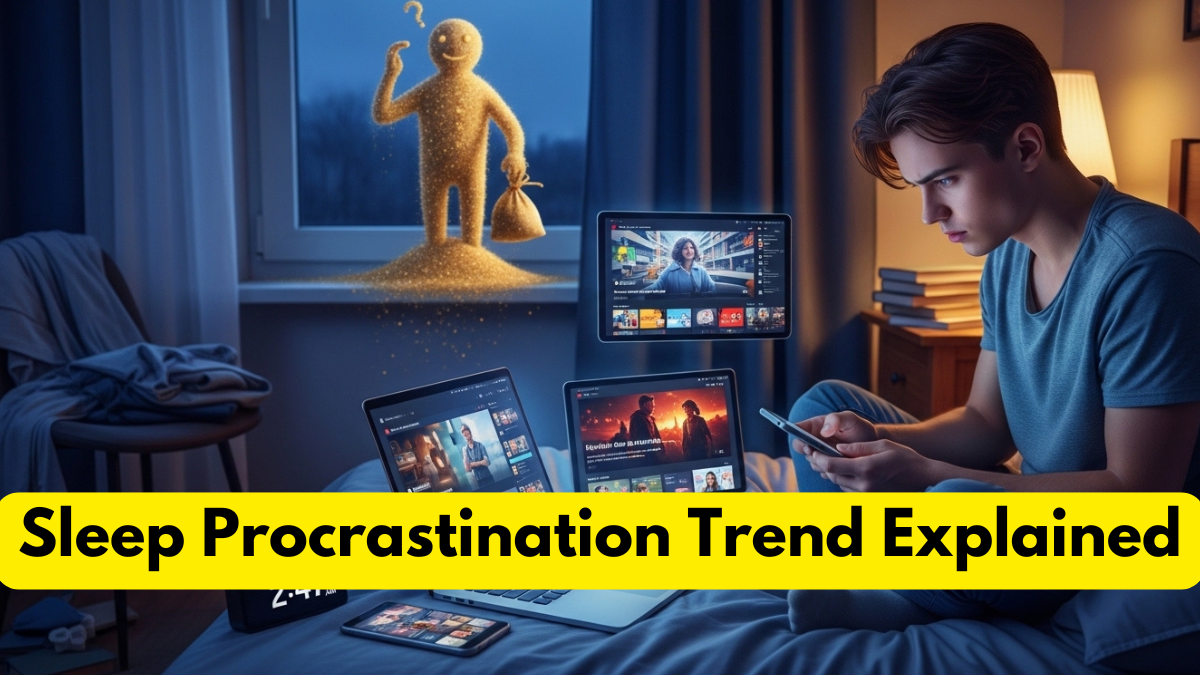
In 2026, many people are going to bed later than they should, even when they know they are tired and need rest. This growing behavior is known as the sleep procrastination trend, and it has become one of the most common hidden lifestyle problems among students, professionals, and even parents. People delay sleep not because they are not sleepy, but because they feel the need for more personal time at night.
This pattern is strongly connected to unhealthy late night habits such as endless scrolling, binge-watching, gaming, unnecessary work, or simply staying awake to feel a sense of control after a stressful day. Over time, these routines create serious sleep issues that affect energy, focus, mood, and overall health.
Understanding the sleep procrastination trend helps people recognize that poor sleep is not always caused by insomnia. Often, it is caused by emotional habits and daily routines that silently push rest further away.
Why Sleep Procrastination Trend Is Growing
One of the biggest reasons behind the sleep procrastination trend is emotional exhaustion. Many people spend the entire day working, studying, managing family responsibilities, or handling stress. Nighttime becomes the only personal space they feel they truly own.
This creates unhealthy late night habits where people stay awake just to enjoy freedom, silence, or entertainment. Even when the body is tired, the mind resists sleep because it does not want the day to end.
Digital dependence also plays a major role. Social media, streaming platforms, and mobile games make it easy to lose track of time. What starts as “just 10 minutes” often turns into hours, leading to long-term sleep issues.
Work-from-home routines have made this worse for many people. Without strong boundaries between work and personal life, nights often become the only time people feel disconnected from pressure. This strengthens the sleep procrastination trend even more.
Common Late Night Habits That Cause Sleep Problems
The most common late night habits include scrolling through social media, watching videos, checking emails, and online shopping. These activities seem relaxing but often keep the brain active and emotionally stimulated.
Another major issue is late-night productivity. Some people delay sleep because they feel guilty for not doing enough during the day. They start working late, believing they are being productive, but this creates long-term sleep issues and emotional exhaustion.
Stress eating and caffeine use at night also contribute. Snacks, coffee, or energy drinks close to bedtime confuse the body’s natural sleep rhythm and make the sleep procrastination trend stronger.
Even emotional overthinking becomes a habit. Many people lie in bed replaying conversations, worrying about tomorrow, or mentally carrying unfinished work. This mental activity is one of the strongest hidden causes of delayed sleep.
Poor sleep often begins with small repeated habits, not one major problem.
How Sleep Issues Affect Daily Life
The biggest effect of the sleep procrastination trend is low energy. People wake up tired, struggle to focus, and feel emotionally irritated throughout the day. This creates a cycle where exhaustion leads to more poor decisions at night.
Strong sleep issues also affect mental health. Anxiety, mood swings, low patience, and emotional sensitivity often become worse when proper rest is missing. Sleep is deeply connected to emotional stability.
Physical health suffers too. Poor sleep affects digestion, immunity, productivity, and even long-term heart health. What looks like simple tiredness can quietly become a bigger health concern.
Relationships are also affected. Irritability and lack of emotional patience create unnecessary tension at home and work. Many people do not realize their communication problems are linked to poor sleep and unhealthy late night habits.
The sleep procrastination trend often feels harmless until daily life starts becoming harder than it should be.
Table: Healthy Night Routine vs Sleep Procrastination Habit
| Healthy Night Routine | Sleep Procrastination Habit |
|---|---|
| Fixed bedtime schedule | Random delayed sleeping time |
| Screen-free time before sleep | Endless scrolling and binge-watching |
| Calm reading or relaxation | Stressful late-night work |
| Light dinner and limited caffeine | Heavy snacks and caffeine late at night |
| Emotional rest and quiet routine | Overthinking and mental stimulation |
| Better sleep quality | Constant sleep issues and fatigue |
This table shows how the sleep procrastination trend develops through repeated choices. Better control of late night habits creates healthier routines and fewer long-term sleep issues.
How to Break the Sleep Procrastination Cycle
The first step to fixing the sleep procrastination trend is understanding why sleep is being delayed. Is it boredom, stress, lack of personal time, or simple digital addiction? Awareness creates better solutions.
Creating a fixed bedtime routine is one of the strongest ways to improve sleep issues. Going to bed at the same time daily helps the body rebuild natural sleep rhythm and emotional stability.
Reducing screen use at night is also important. Even 30 minutes without phones before sleep helps calm the brain and weakens unhealthy late night habits. Reading, journaling, or soft music can replace endless scrolling.
People should also create personal time earlier in the day. If relaxation only happens at midnight, the brain will keep protecting that time. Small evening breaks reduce the emotional need to stay awake too late.
Most importantly, sleep should be treated as self-care, not wasted time. Rest improves everything else.
Conclusion
The sleep procrastination trend is growing because modern life leaves many people emotionally tired but mentally restless. Delaying sleep feels like freedom in the moment, but it often creates deeper exhaustion later.
Unhealthy late night habits like scrolling, overworking, and overthinking slowly turn into serious sleep issues that affect focus, health, and emotional well-being. The problem is not always lack of sleep opportunity—it is often lack of healthy boundaries.
Improving sleep begins with simple awareness and small routine changes. Better nights create better mornings, stronger productivity, and healthier relationships.
As more people understand the real cost of delayed sleep, the sleep procrastination trend becomes less about bedtime and more about learning how to protect personal peace in a busy world.
FAQs
What is sleep procrastination trend?
The sleep procrastination trend refers to delaying sleep even when a person feels tired, usually because of emotional habits, stress, or the desire for personal time at night.
What late night habits cause poor sleep?
Common late night habits include social media scrolling, binge-watching, gaming, working late, stress eating, and drinking caffeine too close to bedtime.
Can sleep procrastination create serious sleep issues?
Yes, repeated delayed sleep can cause major sleep issues like fatigue, low focus, anxiety, poor mood, and long-term physical health problems.
How can I stop delaying sleep every night?
Create a fixed bedtime, reduce screen time before sleep, manage stress earlier in the day, and build calming night routines instead of overstimulating habits.
Is sleep procrastination the same as insomnia?
No, insomnia is difficulty sleeping even when trying to sleep, while the sleep procrastination trend is choosing to delay sleep despite being tired.
Click here to learn more.