The idea of collecting valuable resources from space once sounded like pure science fiction, but in 2026, it has become a serious topic in technology, economics, and global innovation. Governments, private companies, and research organizations are now actively discussing the space mining future 2026 and how off-Earth resources could reshape industries on Earth. From rare metals to water extraction, the concept of asteroid mining is attracting attention because it could support both economic growth and deep space exploration. This growing conversation is also expanding the global space economy beyond satellites and rocket launches.
As Earth faces rising demand for minerals, energy resources, and sustainable development solutions, scientists are looking toward space for long-term answers. Asteroids contain metals like platinum, nickel, and cobalt, while the Moon and other celestial bodies may offer water and useful materials for future missions. This makes the space mining future 2026 more than just a business idea—it is becoming part of strategic global planning. The rise of asteroid mining is directly connected to the future strength of the space economy and humanity’s long-term expansion beyond Earth.
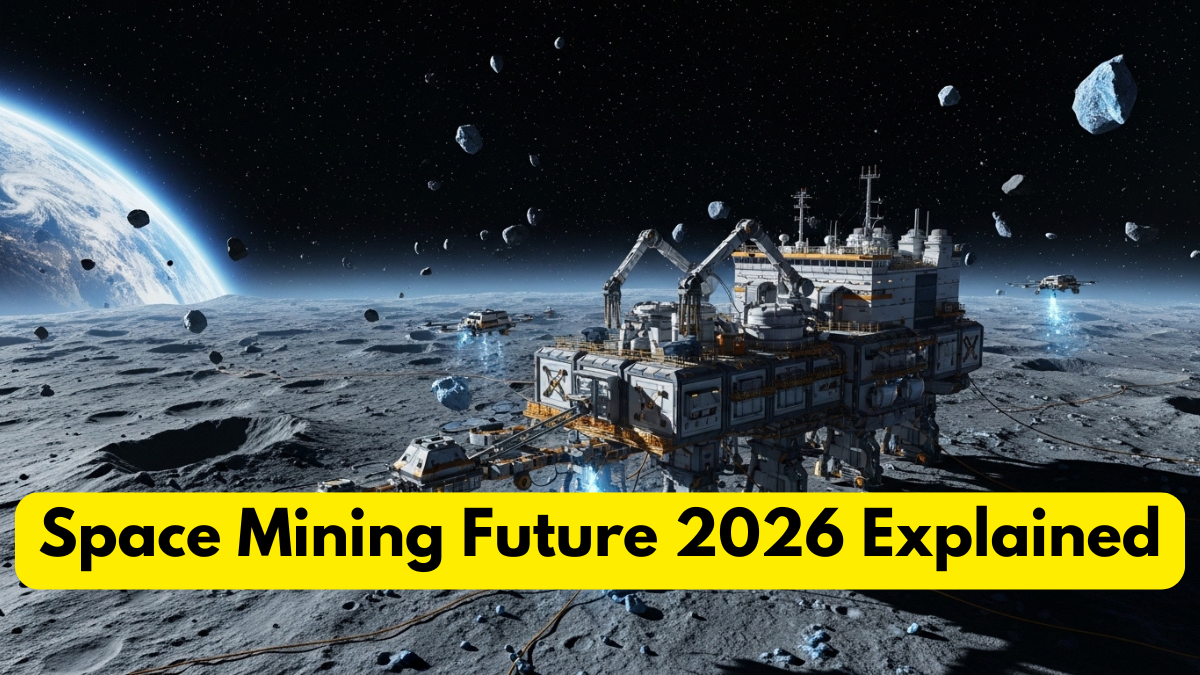
What Is Space Mining and Why It Matters
Space mining means extracting useful resources from asteroids, the Moon, or other planetary bodies instead of relying only on Earth’s natural reserves. This could include precious metals, fuel-producing materials, and water needed for life support and future missions.
The reason the space mining future 2026 matters so much is simple: Earth’s resources are limited, while space offers enormous untapped potential. Some asteroids contain rare metals in quantities far beyond what is easily available on Earth. This makes asteroid mining attractive for both industry and scientific progress.
It also supports future missions. Water mined in space could be converted into hydrogen and oxygen for rocket fuel, reducing the need to launch everything from Earth. This would make the space economy far more efficient and sustainable over time.
How Asteroid Mining Could Change Industries
The impact of asteroid mining could be massive across technology, manufacturing, and energy sectors. Rare metals used in electronics, batteries, and clean energy systems are becoming more important every year.
If the space mining future 2026 develops successfully, industries may gain access to more stable resource supplies without increasing environmental damage on Earth. This could improve renewable energy production, electric vehicle manufacturing, and advanced electronics.
The financial value is also enormous. Some scientists estimate that a single metal-rich asteroid could contain billions of dollars in valuable materials. This is why the space economy is attracting serious private investment from aerospace companies and governments.
Beyond profit, asteroid mining could reduce dependence on geopolitically sensitive supply chains and create stronger global technological independence.
Table of Potential Space Mining Resources and Their Uses
| Resource | Found In | Possible Use |
|---|---|---|
| Platinum | Metal-rich asteroids | Electronics and industry |
| Nickel | Asteroids | Steel production and batteries |
| Cobalt | Asteroids | EV batteries and technology |
| Water Ice | Moon and asteroids | Drinking water and rocket fuel |
| Iron | Asteroids | Space construction materials |
| Rare Earth Elements | Lunar soil and asteroids | High-tech manufacturing |
This table shows why the space mining future 2026 is being taken seriously. The growth of asteroid mining could directly strengthen the modern space economy and reshape how industries think about long-term resource planning.
Challenges Facing Space Mining in 2026
Even though the idea is exciting, the space mining future 2026 still faces major technical and legal challenges. Reaching asteroids, extracting resources, and transporting them safely requires extremely advanced and expensive technology.
The cost of missions remains one of the biggest barriers. Launching spacecraft, robotic systems, and return operations is still highly expensive. This makes profitable asteroid mining difficult in the short term.
Legal ownership is another issue. International space law is still developing, and many countries debate who has the right to own resources taken from space. This uncertainty affects business investment in the space economy.
There are also ethical concerns. Scientists want to ensure that future space development does not repeat the environmental mistakes made on Earth. Responsible planning matters greatly.
Private Companies and the New Space Economy
One major reason the space mining future 2026 is advancing is the rise of private aerospace companies. Space is no longer controlled only by national governments. Private investment has made innovation faster and more competitive.
Companies working on launch systems, robotic exploration, and lunar technology are helping expand the space economy rapidly. Investors now see asteroid mining not just as a dream, but as a long-term strategic opportunity.
This private involvement also creates new jobs in engineering, robotics, AI, and materials science. Universities and startups are joining the conversation, making the space mining future 2026 part of broader economic planning.
As launch costs improve, the speed of innovation is expected to increase even more.
Could Space Mining Really Become Normal?
Many experts believe that asteroid mining may begin first by supporting space missions rather than bringing expensive metals directly back to Earth. Water and fuel production in orbit could become the first practical step.
This would make the space economy stronger by supporting lunar bases, Mars missions, and long-term human presence in space. Full industrial mining may take longer, but early systems could arrive sooner than many people expect.
The space mining future 2026 is still in the early stages, but history shows that major industries often begin with ideas once considered impossible. Space exploration is following that same path.
What feels futuristic today may become standard in the coming decades.
Conclusion
The space mining future 2026 represents one of the most exciting possibilities for technology, science, and global economics. As Earth’s resource demands continue to grow, looking beyond our planet is becoming a practical strategy rather than just imagination.
The rise of asteroid mining could transform industries by providing access to valuable metals, fuel resources, and long-term sustainability for deep space missions. At the same time, the expanding space economy is creating new business opportunities and pushing innovation faster than ever before.
While challenges remain in technology, law, and cost, the direction is clear—space is becoming part of the future economy. The next major industrial revolution may not happen only on Earth, but far beyond it.
FAQs
What is the space mining future 2026?
The space mining future 2026 refers to the growing development of extracting valuable resources from asteroids, the Moon, and other space bodies for industrial and exploration purposes.
Why is asteroid mining important?
Asteroid mining is important because it could provide rare metals, fuel resources, and water while reducing pressure on Earth’s limited natural resources.
How does space mining affect the space economy?
Space mining strengthens the space economy by creating new industries, supporting deep space missions, and increasing private investment in aerospace technology.
Is asteroid mining possible right now?
Technically, research and early mission planning are happening, but large-scale profitable asteroid mining still requires major technological and financial progress.
Could space mining help future Mars missions?
Yes, resources like water and fuel produced through asteroid mining could support long-distance missions and make future Mars exploration more practical.
Click here to learn more.