The digital economy is undergoing a fundamental realignment as the trust economy begins to replace attention-based monetization models. For years, online platforms rewarded visibility, clicks, and time spent, often at the expense of quality and credibility. This approach encouraged sensationalism, algorithmic manipulation, and short-term engagement. However, growing user fatigue and declining confidence in platforms are driving a shift toward systems built on digital trust. In this new landscape, value is generated through reliability, transparency, and long-term relationships rather than raw attention.
This transformation is particularly visible in how creators earn income online. Traditional advertising-driven models often forced creators to chase virality, compromising authenticity. The trust economy introduces a different incentive structure, where creator monetization is directly linked to audience loyalty and perceived value. Instead of competing for fleeting attention, creators focus on serving smaller but more committed communities. This shift reflects a broader demand for digital trust as users seek meaningful engagement rather than endless content consumption.
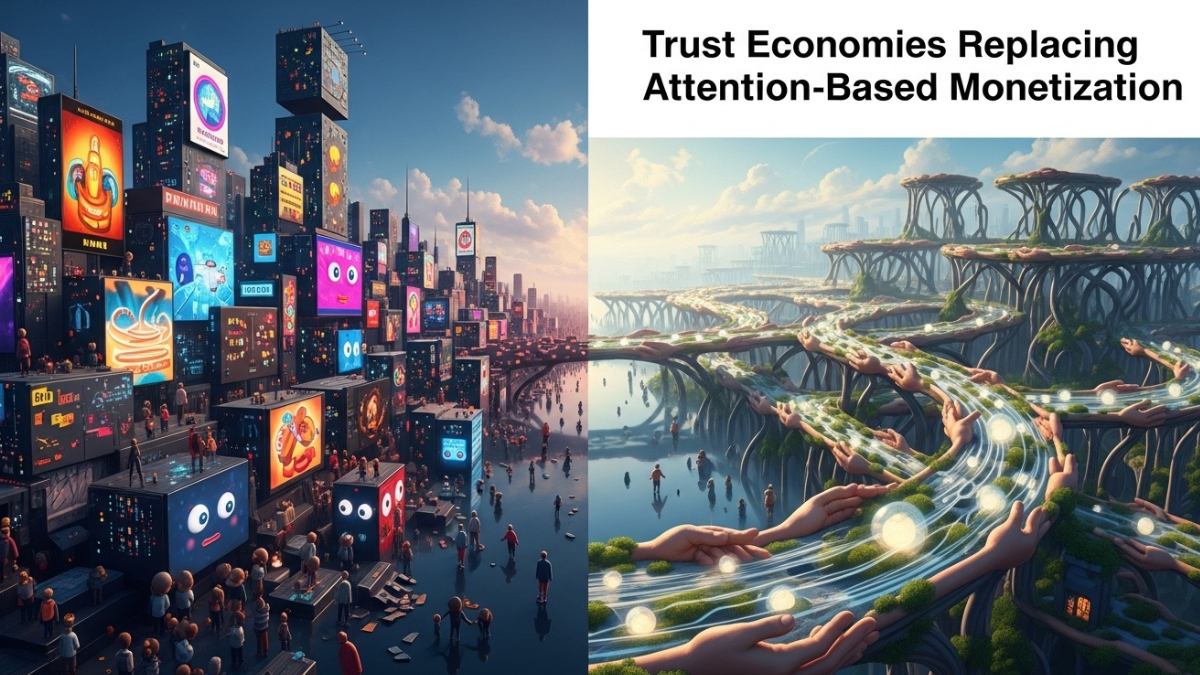
Why Attention Based Monetization Is Losing Effectiveness
Attention-based monetization relies on maximizing screen time, often through emotionally charged or exaggerated content. While effective in the short term, this model has eroded user confidence. Audiences increasingly recognize manipulative tactics and respond by disengaging or blocking ads. As a result, platforms built solely on attention metrics face declining returns. The trust economy emerges as a response to this imbalance, prioritizing credibility over clicks. When digital trust is compromised, attention alone no longer converts into sustainable value.
Another challenge is misalignment between creators and audiences. In attention-driven systems, creators are rewarded for volume rather than usefulness. This dynamic undermines creator monetization by making income unpredictable and dependent on algorithm changes. The trust economy corrects this by aligning incentives with audience satisfaction. When creators earn directly from those who value their work, digital trust strengthens and monetization becomes more stable.
How Creator Monetization Evolves in the Trust Economy
Within the trust economy, creator monetization shifts from indirect advertising revenue to direct support models. Subscriptions, memberships, and value-based services become primary income sources. These methods reward consistency, expertise, and authenticity rather than viral reach. As audiences willingly pay for trusted voices, digital trust becomes the foundation of financial sustainability for creators.
Common creator monetization approaches within the trust economy include:
- Subscription-based newsletters and platforms
- Community memberships with exclusive access
- Direct audience support and patronage
- Educational products and services
- Consulting and personalized offerings
These models demonstrate how creator monetization thrives when audiences feel confident in the value provided. Trust replaces traffic as the core driver of revenue, reinforcing the principles of digital trust.
Comparison Between Attention Economy and Trust Economy Models
The table below highlights key differences between attention-based monetization and the trust economy.
| Aspect | Attention Economy | Trust Economy |
|---|---|---|
| Primary Metric | Views and clicks | Loyalty and credibility |
| Monetization Method | Advertising | Direct creator monetization |
| Audience Relationship | Transactional | Relational |
| Content Incentive | Sensational | Valuable and consistent |
| Digital Trust Level | Low to unstable | High |
| Long-Term Sustainability | Weak | Strong |
This comparison shows why the trust economy is increasingly favored as platforms and creators seek durable creator monetization rooted in digital trust.
Role of Digital Trust in Platform and Community Design
Digital trust plays a central role in shaping platforms aligned with the trust economy. Transparent policies, predictable algorithms, and clear value exchanges are essential. Users need confidence that their data, time, and money are respected. Platforms that prioritize digital trust often limit intrusive advertising and focus on creator-audience alignment. This approach supports healthier ecosystems where creator monetization is not dependent on exploitation of attention.
Communities built on trust also exhibit higher engagement and retention. When members feel respected, they contribute more openly and consistently. This dynamic reinforces the trust economy, where participation is driven by shared values rather than manipulation. Over time, these environments create compounding value for creators and users alike, strengthening digital trust as a competitive advantage.
Long Term Impact of Trust Economies on the Digital Landscape
As the trust economy expands, it reshapes how success is measured online. Influence is no longer defined by reach alone but by depth of connection. Creator monetization becomes more predictable and resilient, reducing dependence on platform algorithms. This stability allows creators to invest in quality and innovation rather than constant output. The result is a healthier digital ecosystem grounded in digital trust.
For users, the shift means fewer distractions and more meaningful experiences. Instead of being treated as attention sources, individuals become active participants in value exchange. The trust economy supports informed choice and long-term satisfaction, signaling a mature phase of digital evolution. As trust-based models scale, they are likely to redefine norms across media, commerce, and community building.
Conclusion
The rise of the trust economy marks a decisive shift away from attention-based monetization toward systems built on credibility and long-term value. By centering creator monetization on loyalty rather than clicks, these models restore balance between creators and audiences. Digital trust becomes the foundation of sustainable growth, benefiting platforms, creators, and users alike. As digital environments continue to evolve, trust-based economies are set to replace attention-driven systems as the dominant model for meaningful and resilient online value creation.
FAQs
What is the trust economy?
The trust economy is a system where value is created through credibility, loyalty, and long-term relationships rather than attention alone.
How does creator monetization work in the trust economy?
Creator monetization relies on direct audience support such as subscriptions, memberships, and services built on digital trust.
Why is attention-based monetization declining?
It undermines digital trust by prioritizing clicks over value, leading to user fatigue and disengagement.
How does digital trust benefit creators?
Digital trust creates stable income, stronger relationships, and predictable creator monetization.
Will trust economies replace advertising completely?
Advertising may continue, but the trust economy is increasingly replacing attention-first models in creator-driven spaces.
Click here to learn more.