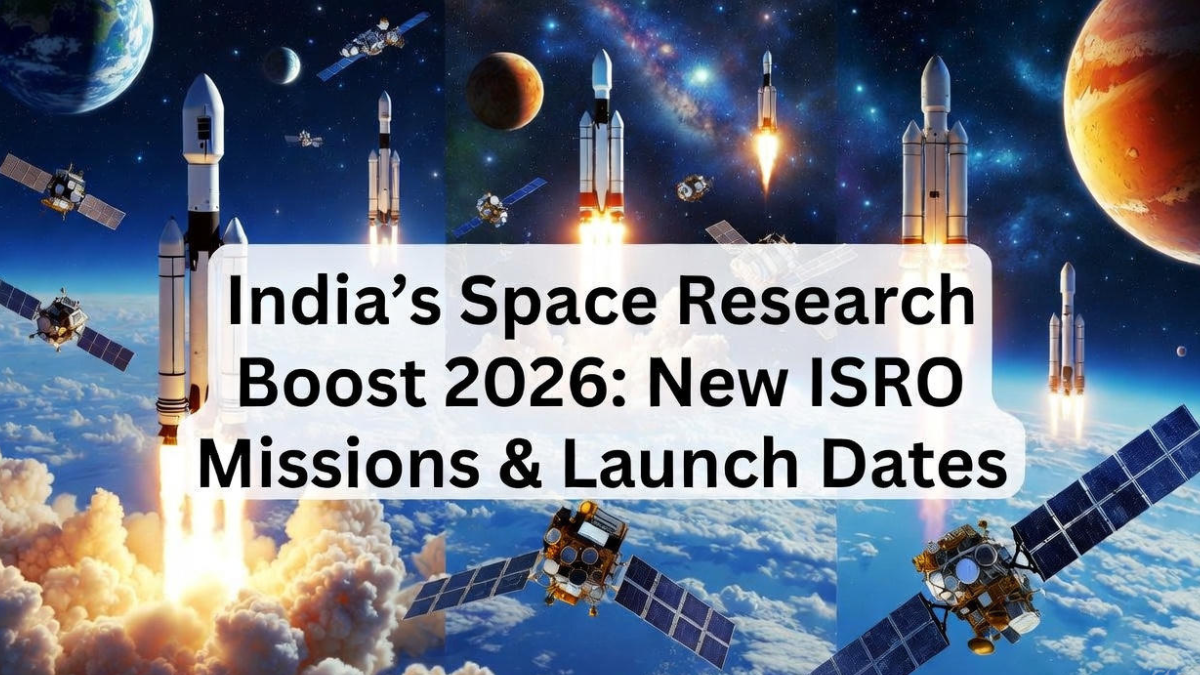
India’s space sector is experiencing a remarkable transformation, and 2026 is emerging as one of the most significant years for ISRO Missions India. With new satellites, advanced launch vehicles, robotic explorations, and international collaborations, India is positioning itself strongly in the global space race. This year marks a major leap in scientific innovation, technological expansion, and long-term planning for deeper Space Research. Millions of Indians are eagerly following these missions, recognizing their potential impact on communication, weather forecasting, national security, and interplanetary exploration.
Over the past decade, ISRO has steadily expanded its capabilities through cost-effective missions, high-precision launches, and successful planetary explorations. As the global demand for satellites and research collaborations grows, ISRO Missions India continue to gain international recognition. In 2026, ISRO is focusing on new-generation rockets, lunar technology, advanced remote-sensing satellites, and innovations in human spaceflight. These developments highlight how rapidly India is strengthening its expertise in Space Research and aiming for technological self-reliance.
Why 2026 Is a Breakthrough Year for ISRO
This year marks a major boost in India’s space capabilities. ISRO is planning key missions that will support navigation, climate study, communication expansion, and deep-space research. The rise in global satellite deployment has created new opportunities for India to become a major launch service provider. This is why ISRO Missions India for 2026 include several commercial launches alongside scientific ones. Such missions increase revenue and help India contribute more actively to global Space Research.
Another reason 2026 is considered a breakthrough year is the improvement in ISRO’s launch vehicle technology. The upgraded GSLV and SSLV versions promise better payload capacity and cost efficiency. These improvements allow India to compete globally and support international satellite launches. The ongoing development of reusable rocket technology also highlights ISRO’s commitment to innovation and long-term Space Research goals. These advancements reflect India’s determination to become a dominant player in the space sector.
Major ISRO Missions Scheduled for 2026
Below is a detailed table listing key ISRO Missions India expected to launch in 2026, along with their objectives and importance in the field of Space Research.
| Mission Name | Launch Purpose | Key Benefit | Status (2026) |
|---|---|---|---|
| Chandrayaan-4 | Lunar exploration & sample return | Advances India’s moon research | Under development |
| Gaganyaan Crew Flight | Human space mission | India’s first crewed orbital test | Final testing stage |
| NISAR (Joint NASA Mission) | Earth observation & climate monitoring | Enhances global climate models | Ready for launch |
| GSAT-21 | Communication satellite | Boosts internet & telecom | Scheduled for 2026 |
| Aditya-L2 | Sun observation mission | Studies solar storms & radiation | Final launch preparation |
| Reusable Launch Vehicle Test | Low-cost future rocket | Supports long-term Space Research | Testing phase |
These missions show how diverse and ambitious ISRO Missions India for 2026 are. They strengthen India’s scientific community, improve infrastructure, and contribute significantly to global knowledge in Space Research.
How ISRO’s New Missions Strengthen India
Each mission planned for 2026 contributes to national development in unique ways. For example, Earth observation missions help predict weather patterns, track agriculture health, and manage disaster responses. This has enormous benefits for farmers, planners, and policymakers. Similarly, communication satellites under ISRO Missions India support better telecom networks, rural internet connectivity, and high-speed data coverage across the country. These developments boost economic growth and digital access.
The upcoming human spaceflight mission is perhaps the most exciting. It demonstrates India’s ability to train astronauts, build life-support systems, and perform orbital experiments. Such missions greatly enhance India’s position in global Space Research. They pave the way for future space stations, lunar bases, and deep-space travel. As ISRO strengthens partnerships with global agencies, India’s scientific influence and collaboration opportunities grow significantly.
India’s Expanding Role in Global Space Research
India is becoming a preferred partner for many nations and private companies due to its cost-effective launch services. The success of ISRO Missions India has attracted international satellite projects, boosting India’s space economy. Countries in Asia, Europe, and Africa increasingly rely on ISRO for launching small and medium satellites. This trust strengthens India’s role in global Space Research and encourages new joint missions.
Additionally, India’s advancements in satellite imaging, climate science, and communication infrastructure support major global projects. The NISAR mission with NASA is one of the best examples of India’s growing leadership in space technology. With increased demand for Earth observation data and navigation systems, ISRO Missions India are expected to play a larger role in global scientific contributions for decades to come.
Conclusion
The year 2026 represents a powerful milestone for India’s space journey. With advanced launches, lunar missions, human spaceflight testing, and international collaborations, ISRO Missions India showcase extraordinary progress. These missions not only strengthen India’s technological foundation but also enhance its global reputation in Space Research. As India aims for deeper exploration and greater innovation, the future of space science looks incredibly promising. ISRO’s achievements highlight a bold vision—one that inspires the next generation of scientists, engineers, and space explorers.
FAQs
What are the major ISRO missions planned for 2026?
Key ISRO Missions India for 2026 include Chandrayaan-4, Gaganyaan crewed flight, NISAR, GSAT-21, and reusable rocket tests supporting Space Research.
How will Gaganyaan benefit India?
It marks India’s entry into human spaceflight and strengthens long-term Space Research goals.
Why is NISAR important for climate studies?
It provides high-precision Earth data, making it essential for global Space Research on climate and environment.
What improvements are expected in India’s communication systems?
Satellites like GSAT-21 under ISRO Missions India enhance internet, telecom, and broadcast quality nationwide.
Is India working on reusable rocket technology?
Yes, ISRO is testing reusable launch vehicles to reduce costs and boost Space Research capabilities.
Click here to learn more