The world of motorsports is undergoing a dramatic transformation as cutting-edge technology reshapes speed, strategy, and competition. One of the most remarkable innovations leading this revolution is the emergence of driverless race cars. Powered by advanced sensors, processors, and artificial intelligence, these vehicles race at astonishing speeds without a human behind the wheel. This breakthrough represents a new era in AI motorsport, where algorithms replace instincts and data replaces human reflexes. As these autonomous machines compete in global racing leagues, the motorsport industry is beginning to witness a future where speed is defined by code and precision engineering.
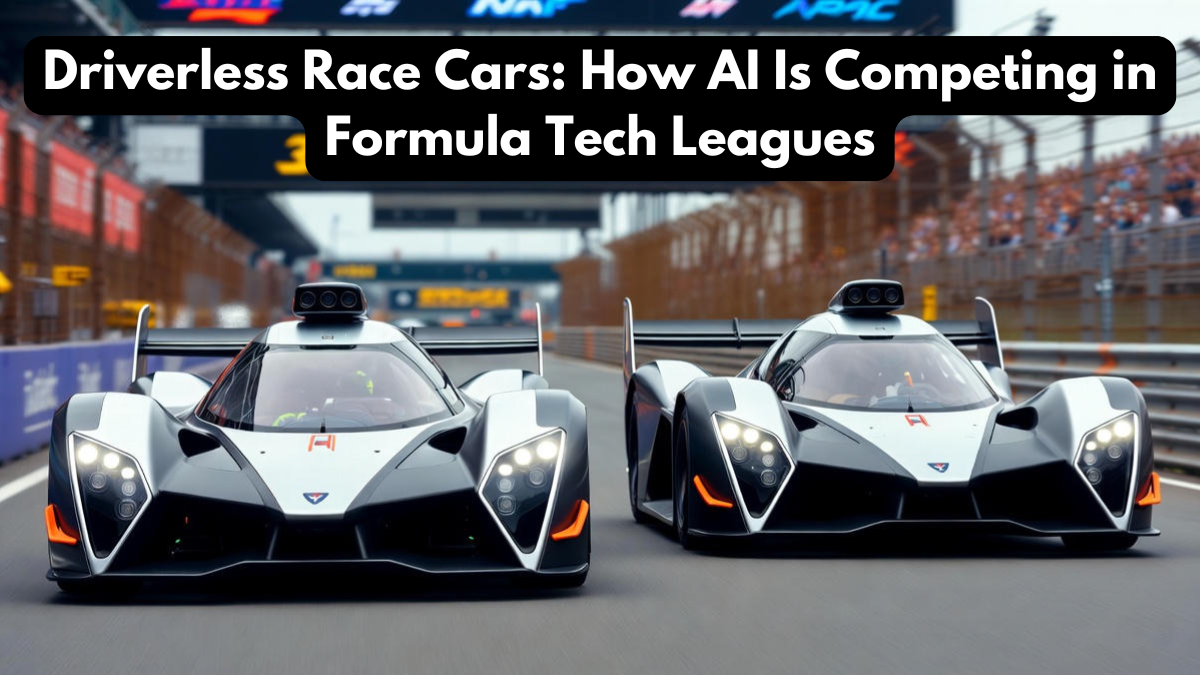
How Driverless Race Cars Operate at Extreme Speeds
The performance of driverless race cars relies on multiple layers of sophisticated technology working in perfect harmony. High-resolution sensors, lidar scanners, radar modules, and ultra-fast onboard computers continuously collect data about the track. Using this information, advanced AI motorsport software analyzes speed, braking points, cornering angles, and competitor positions in real time.
Unlike human drivers, who rely on perception and reaction, autonomous race cars process thousands of calculations per second. This allows them to make instant decisions with incredible accuracy. Their AI systems predict track changes, optimize overtaking strategies, and maintain perfect racing lines. The result is a level of consistency and precision that even expert human drivers struggle to achieve. The synergy between hardware and software is what makes driverless race cars capable of achieving extreme speeds safely.
Why AI Motorsport Is Transforming Professional Racing
The introduction of AI motorsport has sparked intense excitement among engineers, racing teams, and tech innovators. Driverless competition goes beyond entertainment—it pushes the boundaries of artificial intelligence and automotive engineering. Autonomous racing serves as a testing ground for self-driving innovations that eventually trickle down to consumer vehicles.
With driverless race cars, engineers can explore performance limits without risking human safety. They can program new strategies, test advanced aerodynamics, and analyze data with unprecedented detail. This experimentation accelerates innovation not just for racing teams but for the entire automotive industry. From more efficient EV systems to smarter navigation technologies, racing has always influenced mainstream transportation, and AI motorsport is continuing that tradition.
Below is a comparison showing how traditional racing differs from AI-powered racing:
| Feature | Traditional Racing | Driverless Race Cars | Advantage of AI Motorsport |
|---|---|---|---|
| Driver | Human | AI system | No physical limits |
| Reaction Time | 200–300 ms | <1 ms | Faster decision-making |
| Data Processing | Limited | Millions of inputs per second | Higher precision |
| Risk | High | Reduced | Safer testing environment |
| Strategy | Human intuition | Algorithmic optimization | Predictive accuracy |
This comparison highlights why AI motorsport is rapidly becoming a global phenomenon.
Technological Innovations Driving Autonomous Racing
The success of driverless race cars depends on continual innovation. Engineers are developing high-performance processors, advanced sensor fusion systems, and more intelligent machine-learning algorithms. These technologies enable cars to adapt to unpredictable conditions, such as rain, tire wear, or sudden obstacles.
Another breakthrough is real-time communication between vehicles, helping AI motorsport systems coordinate maneuvers and reduce collision risks. Additionally, digital simulators train AI racing models by exposing them to thousands of virtual races, preparing them for real-world track challenges. This training allows autonomous cars to learn and evolve faster than any human driver ever could.
Furthermore, AI-driven telemetry systems provide racing teams with deep insights into vehicle performance. These systems monitor temperature, vibration, battery health, and aerodynamic efficiency. Combined with the raw power of artificial intelligence, driverless race cars are becoming faster, smarter, and more adaptable with each race.
The Future of Driverless Racing Leagues
As autonomous racing continues to gain momentum, leagues dedicated to AI motorsport are emerging worldwide. These competitions attract top engineers, software developers, and automakers looking to showcase their technological leadership. Future races may feature mixed categories where human drivers compete against AI systems, testing skill against machine precision.
In the coming years, driverless race cars are expected to become even more advanced. They will incorporate quantum computing, next-gen EV batteries, aerodynamic AI shaping, and near-perfect predictive algorithms. These advancements will transform motorsport into a high-tech battleground where innovation decides the winner.
Driverless racing will also influence consumer transportation. Technologies perfected on racetracks will enhance safety, efficiency, and performance in everyday vehicles. Autonomous driving systems, emergency braking, lane navigation, and predictive analytics will all benefit from breakthroughs achieved through AI motorsport research.
Conclusion
The rise of driverless race cars is reshaping the future of motorsport. Supported by advanced AI motorsport technologies, these autonomous machines deliver unmatched speed, precision, and innovation. As engineers continue pushing boundaries, driverless racing will unlock new possibilities for both competitive motorsports and everyday transportation. This futuristic blend of AI and high-speed performance marks a bold new chapter in the evolution of global racing.
FAQs
How do driverless race cars make decisions on the track?
driverless race cars use sensors and AI motorsport algorithms to process data and choose the best racing strategies in real time.
Are autonomous race cars faster than human-driven cars?
In many cases, yes. AI motorsport systems react faster and optimize racing lines more precisely than humans.
Do driverless race cars communicate with each other?
Yes, many driverless race cars use vehicle-to-vehicle communication to coordinate movement and avoid collisions.
Is driverless racing safe?
Autonomous racing is considered safer thanks to AI motorsport systems that eliminate human error and reduce risk.
Will AI replace human racers completely?
Not entirely. Human racing will remain a major sport, but driverless race cars will form a new category of competition.
Click here to learn more