Climate accountability has become a defining issue for governments, investors, and the public. As climate risks intensify, stakeholders increasingly expect organizations to provide clear, accurate, and comparable information about their environmental impact. Voluntary disclosures and fragmented sustainability reports are no longer sufficient to meet these expectations. This shift has led to the rapid rise of digital climate disclosure tools, which are now being mandated across multiple jurisdictions to bring consistency and credibility to climate transparency efforts.
The mandate for digital climate disclosure reflects a broader move toward data-driven governance. Policymakers recognize that without standardized systems for collecting and sharing emissions data, climate goals remain difficult to measure and enforce. By formalizing disclosure requirements through digital platforms, authorities aim to improve regulatory compliance, enhance the quality of reporting, and ensure that climate-related information is both actionable and trustworthy.
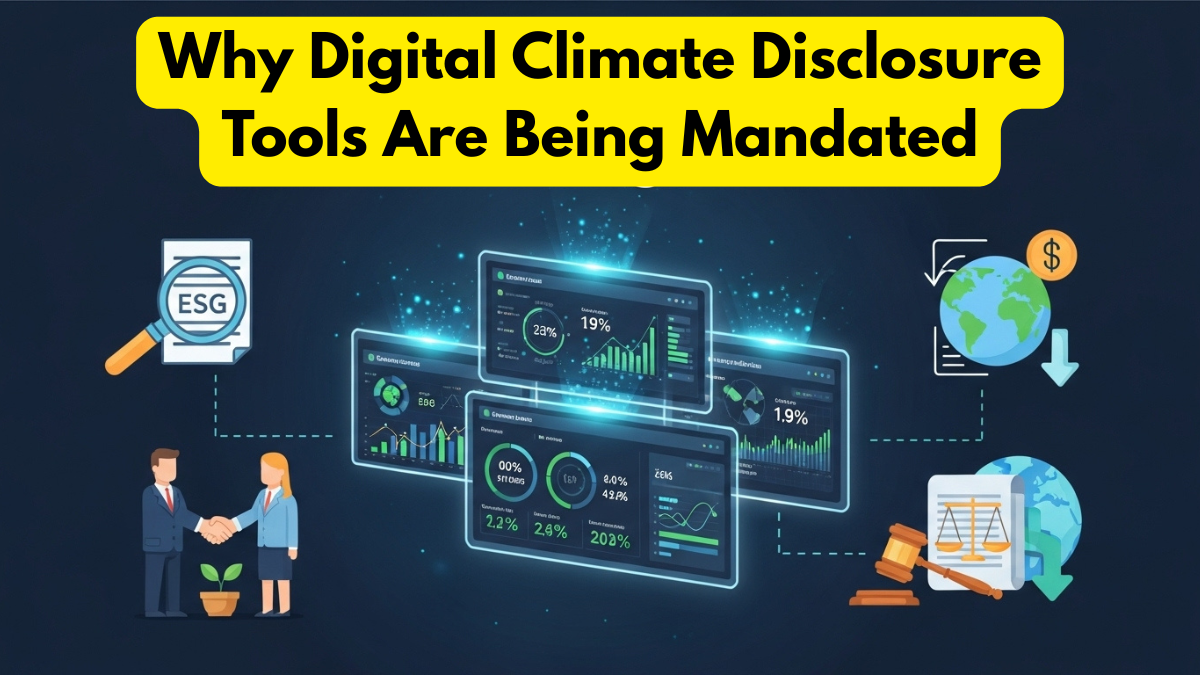
The Regulatory Push for Standardized Climate Reporting
Regulatory bodies around the world are introducing stricter requirements for climate-related disclosures. These regulations are designed to close gaps in transparency and reduce the risk of greenwashing. Digital climate disclosure tools support this objective by providing structured frameworks that align organizational reporting with regulatory standards.
Through centralized digital systems, companies can submit consistent emissions data across reporting periods and jurisdictions. This consistency simplifies regulatory compliance by reducing ambiguity around what must be reported and how. For regulators, digital platforms improve oversight by enabling easier comparison and analysis of climate performance. As a result, reporting becomes more reliable and less prone to manipulation.
How Digital Climate Disclosure Tools Work
Digital climate disclosure tools integrate data collection, validation, and submission into a single workflow. Organizations input environmental data from operations, supply chains, and energy systems into standardized templates. Automated checks help ensure accuracy and completeness, reducing manual errors in emissions data.
These platforms often align with recognized reporting frameworks, making it easier for organizations to meet multiple obligations simultaneously. By automating aspects of reporting, digital tools lower administrative burden while improving data quality. This automation strengthens regulatory compliance and ensures that disclosed information reflects actual performance rather than estimates or outdated figures.
Improving Transparency and Data Quality
Transparency is a central goal of mandated digital climate disclosure. When emissions data is collected and reported through standardized systems, stakeholders gain greater confidence in its accuracy. Investors, customers, and policymakers can access comparable information that supports informed decision-making.
Digital platforms also enable more frequent and granular reporting. Instead of annual summaries, organizations can track emissions trends over time and respond quickly to deviations. This ongoing visibility supports proactive management and reinforces regulatory compliance. Over time, improved transparency encourages organizations to take responsibility for their climate impact rather than treating disclosure as a compliance exercise.
The table below illustrates how digital climate disclosure compares with traditional climate reporting approaches:
| Aspect | Traditional Climate Reporting | Digital Climate Disclosure |
|---|---|---|
| Data format | Fragmented and inconsistent | Standardized and structured |
| Emissions data accuracy | Variable | High and validated |
| Regulatory compliance | Reactive | Proactive and streamlined |
| Reporting frequency | Periodic | Continuous or regular |
| Transparency level | Limited | High and comparable |
This comparison explains why regulators favor digital systems for climate accountability.
Supporting Better Decision-Making and Risk Management
Mandated digital climate disclosure does more than satisfy regulatory requirements. It provides organizations with insights that support strategic decision-making. Accurate emissions data helps identify inefficiencies, prioritize reductions, and assess exposure to climate-related risks.
For policymakers and financial institutions, standardized reporting enables better risk assessment at scale. Governments can track national progress toward climate targets, while investors can evaluate climate risk across portfolios. By improving data accessibility, digital climate disclosure strengthens regulatory compliance while supporting broader economic and environmental stability.
Addressing Challenges and Implementation Barriers
Despite its benefits, implementing digital climate disclosure tools presents challenges. Organizations may face data integration issues, limited internal expertise, or concerns about data sensitivity. Smaller entities, in particular, may struggle with the transition from manual reporting to digital systems.
To address these barriers, regulators often provide guidance and phased implementation timelines. Training and technical support help organizations adapt while maintaining regulatory compliance. Over time, standardized platforms reduce complexity by replacing multiple reporting processes with a single, coherent system for managing emissions data.
The Global Momentum Behind Digital Disclosure
The momentum behind digital climate disclosure is global. International coordination is increasing as countries align disclosure standards to support cross-border comparability. This alignment reduces duplication and enhances the effectiveness of climate policies.
As disclosure requirements expand, digital tools will become essential infrastructure for climate governance. Organizations that adopt digital climate disclosure early are better positioned to meet evolving expectations and demonstrate leadership. By strengthening reporting, ensuring regulatory compliance, and improving emissions data quality, these tools lay the groundwork for more accountable climate action.
Conclusion
The mandate for digital climate disclosure reflects a critical shift toward transparency, accountability, and data-driven climate governance. By standardizing emissions data, simplifying reporting, and strengthening regulatory compliance, digital tools address long-standing gaps in climate accountability. As climate risks continue to shape economic and policy landscapes, digital climate disclosure will remain a foundational mechanism for measuring progress and driving meaningful action.
FAQs
What is digital climate disclosure?
Digital climate disclosure refers to the use of standardized digital tools to collect and report emissions data and climate-related information.
Why are digital climate disclosure tools being mandated?
They are mandated to improve regulatory compliance, ensure data accuracy, and increase transparency in climate reporting.
How does digital climate disclosure improve emissions data?
It uses standardized templates and automated validation to ensure emissions data is accurate and comparable.
Who must comply with digital climate disclosure requirements?
Requirements vary by jurisdiction but often apply to large corporations, financial institutions, and regulated entities.
Does digital climate disclosure increase reporting burden?
Initially it may require adjustment, but over time it simplifies reporting by automating and standardizing processes.
Click here to learn more.