The way people pay for goods and services is evolving rapidly, and in 2026, biometric payment cards are emerging as a secure and convenient alternative to traditional payment methods. As consumers demand faster and safer transactions, financial technology is responding with innovation. The rise of digital payments has reduced reliance on cash, while smart wallets are transforming how individuals store and manage their financial credentials. Together, these advancements are reshaping the payment ecosystem with a strong focus on security, speed, and user experience.
What Are Biometric Payment Cards and How They Work
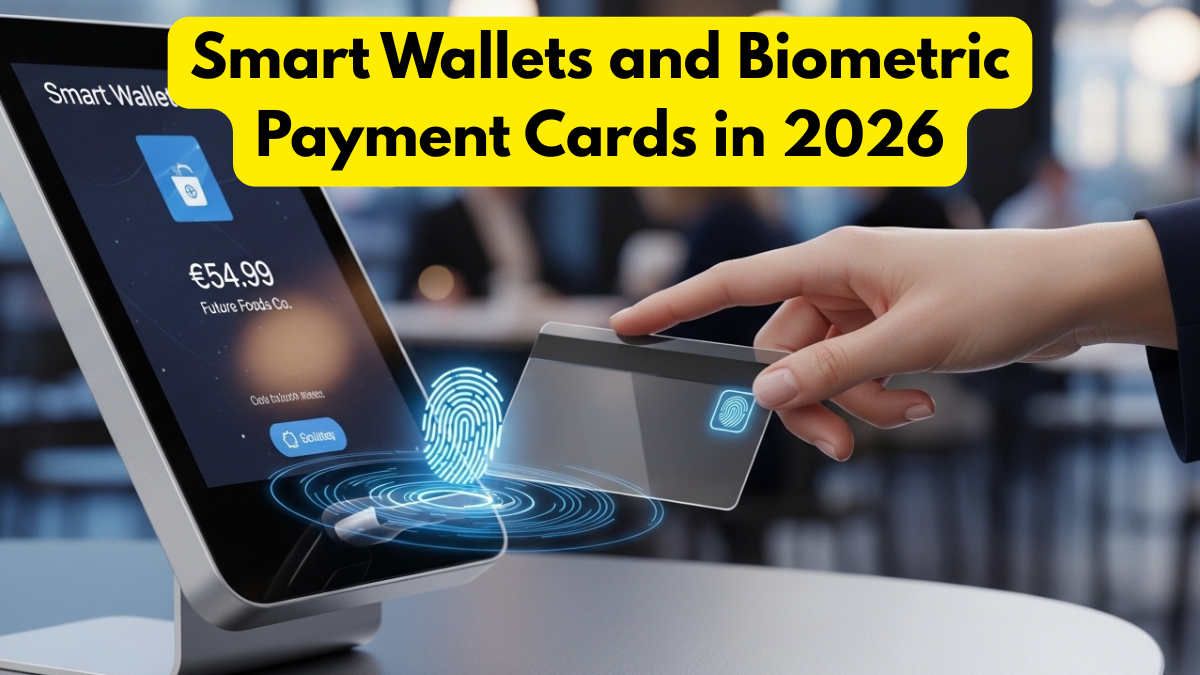
Biometric payment cards integrate fingerprint or biometric authentication directly into the card itself. Unlike traditional cards that rely on PINs or signatures, these cards verify the cardholder’s identity instantly through biometric data. This process enhances security without adding extra steps to the checkout experience. As digital payments become more widespread, biometric verification ensures that only authorized users can complete transactions.
The technology behind biometric payment cards combines secure sensors, encrypted data storage, and contactless payment systems. These cards work seamlessly with existing point-of-sale terminals, making adoption easier for merchants. When paired with smart wallets, users gain centralized control over multiple payment options, further simplifying digital payments while maintaining strong security standards.
Role of Smart Wallets in Modern Digital Payments
Smart wallets play a crucial role in managing and enhancing digital payments. They allow users to store biometric cards, credit cards, loyalty programs, and identification credentials in a single digital interface. By integrating with biometric payment cards, smart wallets provide a frictionless payment experience across devices and platforms.
In 2026, smart wallets are more than storage tools. They offer transaction insights, spending analytics, and security alerts. This added intelligence helps users manage finances more effectively while benefiting from the enhanced protection of biometric payment cards. The combination of convenience and security is accelerating the shift toward fully digital payment ecosystems.
Benefits of Biometric Payment Cards for Consumers and Businesses
The adoption of biometric payment cards offers significant advantages for both consumers and merchants. For users, biometric authentication removes the need to remember PINs or worry about stolen cards. Digital payments become faster and safer, especially in high-traffic environments. Businesses benefit from reduced fraud and improved customer trust.
Key benefits of biometric payment cards include:
- Enhanced security through biometric verification
- Faster checkout experiences
- Reduced risk of card theft and fraud
- Seamless integration with smart wallets
- Greater confidence in digital payments
These benefits explain why adoption of biometric solutions is accelerating globally.
Comparison of Traditional Payment Cards and Biometric Payment Cards
To understand the impact of biometric payment cards, it is useful to compare them with traditional payment cards. Traditional systems rely on external verification methods, while biometric cards embed security directly into the payment process. This shift strengthens digital payments and improves user convenience.
The table below compares traditional cards with biometric payment cards:
| Feature | Traditional Payment Cards | Biometric Payment Cards |
|---|---|---|
| Authentication | PIN or signature | Biometric verification |
| Security Level | Moderate | High |
| Fraud Risk | Higher | Significantly reduced |
| User Convenience | Standard | Seamless |
| Integration | Limited | Works with smart wallets |
This comparison highlights why biometric payment cards are gaining momentum in 2026.
Impact of Digital Payments on Global Commerce
The expansion of digital payments has transformed global commerce, enabling faster transactions and broader financial inclusion. Biometric payment cards contribute to this transformation by addressing security concerns that previously limited adoption. As trust in digital payments grows, more consumers and businesses are moving away from cash-based systems.
International transactions also benefit from this shift. Smart wallets and biometric verification reduce friction in cross-border payments, improving efficiency and transparency. These advancements support e-commerce growth and make global trade more accessible, especially in emerging markets.
Challenges and Security Considerations
Despite their advantages, biometric payment cards face challenges related to privacy and data protection. Users must trust that biometric data is stored securely and never misused. Financial institutions are addressing these concerns through encryption and on-card data storage, ensuring biometric information never leaves the card.
Adoption also depends on infrastructure readiness. Merchants must support contactless payments to fully utilize biometric payment cards. As digital payments infrastructure expands, these challenges are gradually being resolved. Education and transparency are key to building user confidence in smart wallets and biometric technologies.
Future Trends in Smart Wallets and Biometric Payments
The future of biometric payment cards points toward deeper integration with wearable devices and mobile platforms. Smart wallets will continue to evolve, offering advanced security features and personalized financial insights. As artificial intelligence enhances fraud detection, digital payments will become even more secure and efficient.
In the coming years, biometric authentication may expand beyond fingerprints to include facial recognition and behavioral biometrics. This evolution will further strengthen biometric payment cards and reinforce trust in digital payments systems worldwide.
Conclusion
In 2026, biometric payment cards are redefining how people interact with money by combining security and convenience. Supported by advanced smart wallets and a growing digital payments ecosystem, these innovations reduce fraud and improve user experience. While challenges remain, ongoing technological advancements and regulatory support are driving widespread adoption. As consumers and businesses embrace biometric solutions, biometric payment cards will play a central role in the future of secure and seamless payments.
FAQs
What are biometric payment cards?
Biometric payment cards are payment cards that use fingerprint or biometric data to authenticate transactions securely.
How do smart wallets support biometric payment cards?
Smart wallets store and manage biometric cards digitally, offering additional features for secure and convenient digital payments.
Are biometric payment cards safe to use?
Yes, biometric payment cards use encrypted, on-card data storage to protect user information and reduce fraud.
Will biometric payment cards replace traditional cards?
While traditional cards will still exist, biometric payment cards are expected to become a preferred option as digital payments continue to grow.
Click here to learn more.