Modern workplaces are evolving rapidly as businesses recognize the importance of employee wellbeing and mental performance. One of the most influential concepts shaping this transformation is cognitive ergonomics, which focuses on designing environments that support how people think, process information, and maintain concentration. Instead of only considering physical comfort, companies are now exploring workspace psychology to understand how lighting, layout, and technology influence productivity. By integrating focus design principles into office planning, organizations aim to create spaces that reduce mental fatigue while enhancing creativity and collaboration.
As remote work and hybrid offices become more common, the need for brain-friendly environments has increased significantly. Whether at home or in corporate settings, applying cognitive ergonomics helps individuals manage distractions and maintain efficiency. This shift highlights how workplace design is moving beyond aesthetics to prioritize mental wellbeing and sustainable performance.
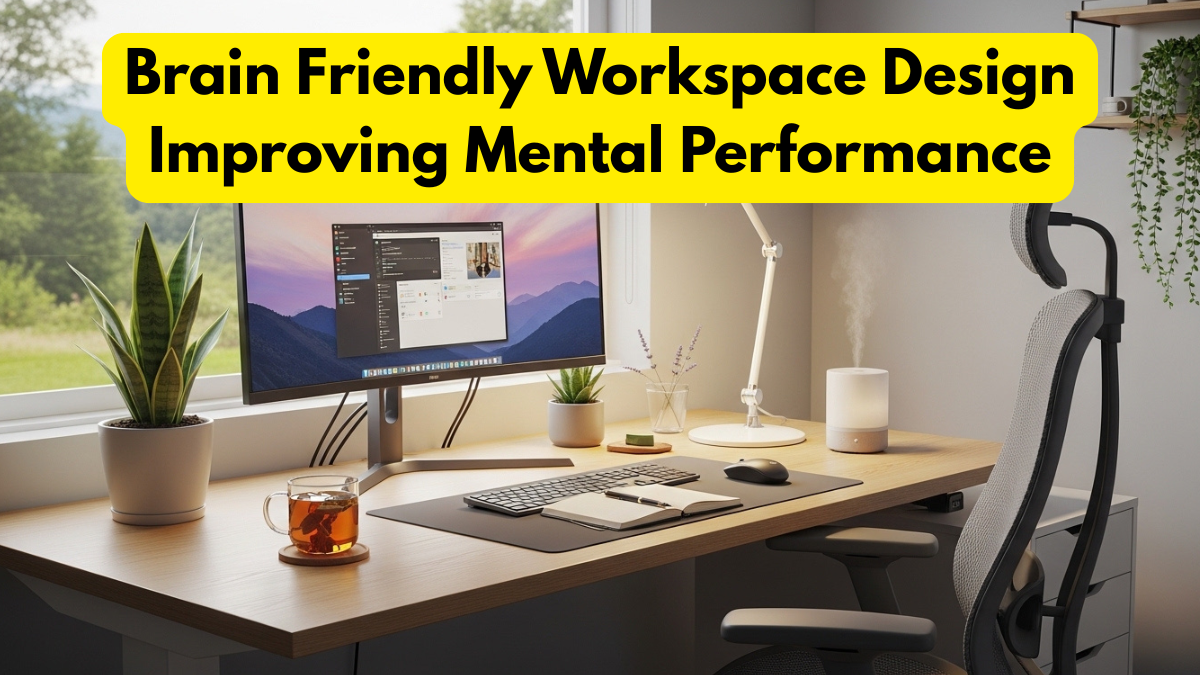
Understanding Workspace Psychology and Mental Performance
Workspace psychology examines how environmental factors influence mood, motivation, and decision-making. Research shows that cluttered desks, poor lighting, and excessive noise can negatively impact focus and stress levels. By applying cognitive ergonomics, designers can create environments that align with natural cognitive processes, making it easier for employees to stay engaged throughout the day.
Key psychological factors that influence workplace performance include:
• Natural lighting that supports alertness and reduces eye strain
• Quiet zones that promote deep work and concentration
• Flexible seating arrangements that encourage movement
• Visual elements that enhance creativity without overwhelming the senses
When combined with thoughtful focus design, these elements help create balanced environments that support both productivity and emotional wellbeing. Businesses that invest in workspace psychology often see improvements in employee satisfaction and reduced burnout rates.
Principles of Focus Design in Modern Workspaces
The concept of focus design centers on minimizing distractions while maximizing efficiency. Unlike traditional open offices that may increase noise and interruptions, modern workspace strategies use cognitive ergonomics to create zones tailored for specific tasks. This approach ensures that employees have access to environments suited for brainstorming, collaboration, or quiet concentration.
Important focus design strategies include:
• Sound-absorbing materials that reduce background noise
• Adjustable lighting systems that adapt to different tasks
• Ergonomic furniture designed to support long periods of work
• Digital tools that align with workspace psychology principles
By applying these strategies, organizations can foster environments that encourage sustained attention. The integration of cognitive ergonomics ensures that design decisions are based on scientific understanding rather than purely aesthetic trends.
Comparing Traditional Office Layouts With Cognitive Ergonomics Design
To better understand the impact of cognitive ergonomics, it is useful to compare traditional office layouts with modern brain-friendly workspace designs. The table below highlights how focus design and workspace psychology influence productivity and employee wellbeing.
| Workspace Type | Level of Focus Support | Mental Wellbeing Impact | Role of Cognitive Ergonomics | Use of Focus Design |
|---|---|---|---|---|
| Traditional Cubicles | Moderate | Limited flexibility | Basic ergonomic considerations | Minimal customization |
| Open Plan Offices | Low for deep work | Increased distractions | Limited cognitive planning | Weak focus design elements |
| Brain Friendly Workspaces | High focus support | Strong mental wellbeing benefits | Core application of cognitive ergonomics | Advanced focus design strategies |
| Hybrid Remote Setups | Variable | Depends on home environment | Growing adoption of workspace psychology | Flexible design options |
This comparison shows how applying cognitive ergonomics can transform workplaces into environments that enhance concentration and creativity. By prioritizing workspace psychology, businesses can create more adaptable and effective office spaces.
Challenges in Implementing Brain Friendly Workspace Design
While the benefits of cognitive ergonomics are clear, implementing these principles requires careful planning and investment. Organizations may face challenges when transitioning from traditional layouts to environments centered on focus design and mental wellbeing. Balancing collaboration with quiet workspaces can also be complex, especially in fast-paced industries.
Common challenges include:
• High costs associated with redesigning office layouts
• Resistance to change from employees accustomed to traditional setups
• Difficulty measuring the direct impact of workspace psychology improvements
• Ensuring accessibility and inclusivity in cognitive ergonomics solutions
Despite these obstacles, many companies view brain-friendly workspace design as a long-term investment. By prioritizing workspace psychology and focus design, businesses can improve employee engagement and create environments that adapt to evolving work styles.
The Future of Cognitive Ergonomics in Work and Remote Environments
As technology continues to shape how people work, the future of cognitive ergonomics is expected to include smarter tools and adaptive environments. Artificial intelligence may soon analyze productivity patterns to suggest personalized workspace adjustments, while virtual reality could simulate ideal work environments for remote teams. These innovations aim to enhance workspace psychology by tailoring environments to individual needs.
Emerging trends shaping the future of brain-friendly workspace design include:
• AI-driven lighting and sound adjustments based on focus levels
• Biophilic design elements that incorporate nature into workspaces
• Wearable devices that monitor cognitive load and stress
• Modular furniture that supports flexible focus design strategies
By embracing these advancements, organizations can create work environments that support long-term mental performance. The integration of cognitive ergonomics into both physical and digital workspaces will play a crucial role in shaping the future of productivity.
Conclusion
The growing emphasis on cognitive ergonomics highlights the importance of designing workspaces that support mental wellbeing and sustained focus. By integrating principles of workspace psychology and thoughtful focus design, businesses can create environments that enhance productivity while reducing stress. As workplaces continue to evolve, brain-friendly design strategies will become essential for maintaining employee satisfaction and performance. Investing in cognitive ergonomics today allows organizations to build adaptable, innovative workspaces that meet the demands of modern professionals.
FAQs
What is cognitive ergonomics?
cognitive ergonomics focuses on designing environments and tools that align with how people think, learn, and maintain concentration.
How does workspace psychology affect productivity?
workspace psychology examines how environmental factors influence mood, focus, and performance, helping organizations create better workspaces.
What is focus design in office environments?
focus design refers to creating spaces that minimize distractions and support deep work through thoughtful layout and technology integration.
Can cognitive ergonomics be applied to home offices?
Yes, applying cognitive ergonomics principles such as proper lighting and organized layouts can improve productivity in both office and remote work environments.
Click here to learn more.