Access to clean drinking water remains one of the most pressing challenges in many parts of the world. Climate change, population growth, and environmental degradation have intensified water scarcity, making innovative solutions essential for sustainable living. One of the most promising developments in this field is the use of atmospheric water generators, devices that extract moisture from the air and convert it into safe, drinkable water. As advancements in clean water tech continue to evolve, these systems are becoming more efficient, portable, and accessible for remote communities. By combining renewable energy sources with advanced filtration methods, atmospheric water generators offer a practical approach to addressing global water challenges while promoting resilience against environmental uncertainties.
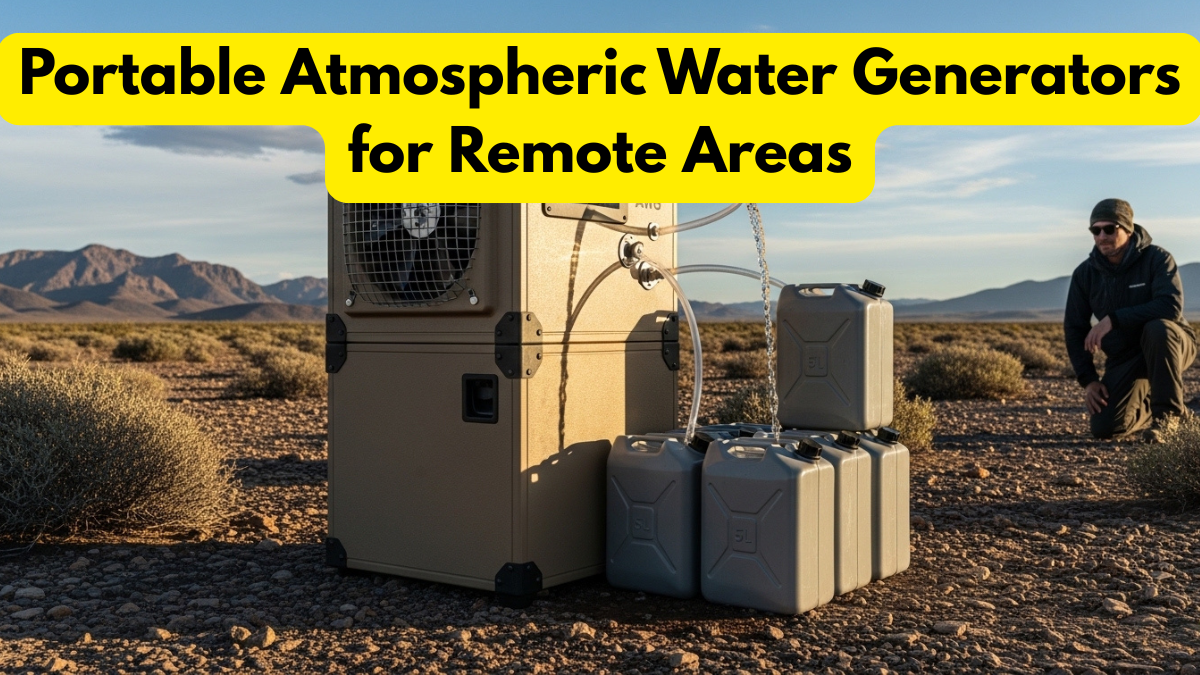
How Clean Water Tech Extracts Moisture From the Air
The science behind atmospheric water generators is both fascinating and practical. These devices work by drawing in humid air, cooling it to condense water vapor, and then purifying the collected water through advanced filtration systems. This process represents a significant advancement in clean water tech, as it eliminates the need for traditional water sources such as rivers or underground wells. In regions facing severe water scarcity, portable units powered by solar energy are providing a sustainable solution for daily water needs. By integrating energy-efficient components, modern atmospheric water generators can produce significant amounts of water even in challenging environments. As clean water tech continues to improve, these devices are becoming more reliable and adaptable to diverse climates.
Key Features of Portable Atmospheric Water Generators
The growing adoption of atmospheric water generators is driven by innovative features that make them suitable for both urban and remote applications. Manufacturers are focusing on portability, efficiency, and durability to meet the demands of communities affected by water scarcity.
Some key features include:
- Advanced filtration systems ensuring safe drinking water through clean water tech
- Solar-powered options designed for remote areas with limited infrastructure
- Compact designs that enhance portability and ease of installation
- Smart monitoring systems that track water production levels
- Energy-efficient cooling mechanisms integrated into atmospheric water generators
These features demonstrate how clean water tech is evolving to address environmental challenges while providing practical solutions for individuals and organizations dealing with water scarcity.
Comparing Traditional Water Sources With Atmospheric Water Generators
Understanding the benefits of atmospheric water generators becomes clearer when compared with conventional water supply methods. While traditional systems rely heavily on natural resources, modern clean water tech provides a more independent and adaptable alternative.
| Feature | Traditional Water Sources | Atmospheric Water Generators |
|---|---|---|
| Water Availability | Dependent on rainfall or groundwater | Generated directly from air |
| Infrastructure Needs | Requires pipelines and storage systems | Portable units powered by clean water tech |
| Environmental Impact | Risk of depletion during water scarcity | Sustainable solution reducing resource strain |
| Accessibility | Limited in remote areas | Ideal for off-grid communities |
| Maintenance | Often complex and resource-heavy | Simplified systems in atmospheric water generators |
This comparison highlights how atmospheric water generators are reshaping access to water by offering innovative solutions that reduce reliance on vulnerable natural sources.
Benefits of Atmospheric Water Generators for Remote Communities
The adoption of atmospheric water generators offers significant advantages, particularly for regions where clean water is difficult to obtain. One of the most important benefits is independence from traditional water infrastructure, which can be unreliable during periods of water scarcity. By using advanced clean water tech, communities can generate water locally, reducing the need for long-distance transportation or bottled water supplies. These devices are also valuable in disaster relief efforts, where access to safe water is critical for survival. In agricultural settings, atmospheric water generators can support irrigation and livestock needs, contributing to sustainable development. As technology advances, these systems are becoming more efficient, making clean water tech a viable solution for addressing global water challenges.
Challenges and Future Innovations in Clean Water Tech
Despite their potential, atmospheric water generators face challenges related to cost, energy consumption, and performance in low-humidity environments. Developers are working to improve efficiency through advanced materials and AI-driven optimization, ensuring that clean water tech remains practical even in arid climates. Another focus area is integrating renewable energy systems to minimize environmental impact while addressing water scarcity. Future innovations may include hybrid devices that combine atmospheric water generation with traditional filtration methods, creating more versatile solutions for diverse environments. As research continues, atmospheric water generators are expected to play an increasingly important role in sustainable water management strategies worldwide.
Conclusion
The rise of atmospheric water generators represents a significant step forward in addressing one of humanity’s most urgent challenges: access to safe drinking water. By leveraging innovative clean water tech, these devices offer a sustainable solution to the growing issue of water scarcity. From remote villages to emergency response scenarios, atmospheric water generators provide a reliable source of water that does not depend on traditional infrastructure. While challenges such as cost and climate limitations remain, ongoing advancements suggest a promising future for this technology. As global awareness of water sustainability continues to grow, clean water tech innovations like atmospheric water generators are poised to transform how communities secure one of life’s most essential resources.
FAQs
What are atmospheric water generators?
Atmospheric water generators are devices that extract moisture from the air and convert it into clean drinking water using advanced clean water tech.
Can atmospheric water generators work in dry climates?
While performance may vary, modern atmospheric water generators are improving efficiency to help address water scarcity even in lower humidity environments.
Are atmospheric water generators safe for drinking water?
Yes, most units include advanced filtration systems as part of clean water tech to ensure the water produced is safe and potable.
Who can benefit from atmospheric water generators?
Remote communities, disaster relief teams, and areas facing water scarcity can greatly benefit from atmospheric water generators powered by innovative clean water tech.
Click here to learn more.