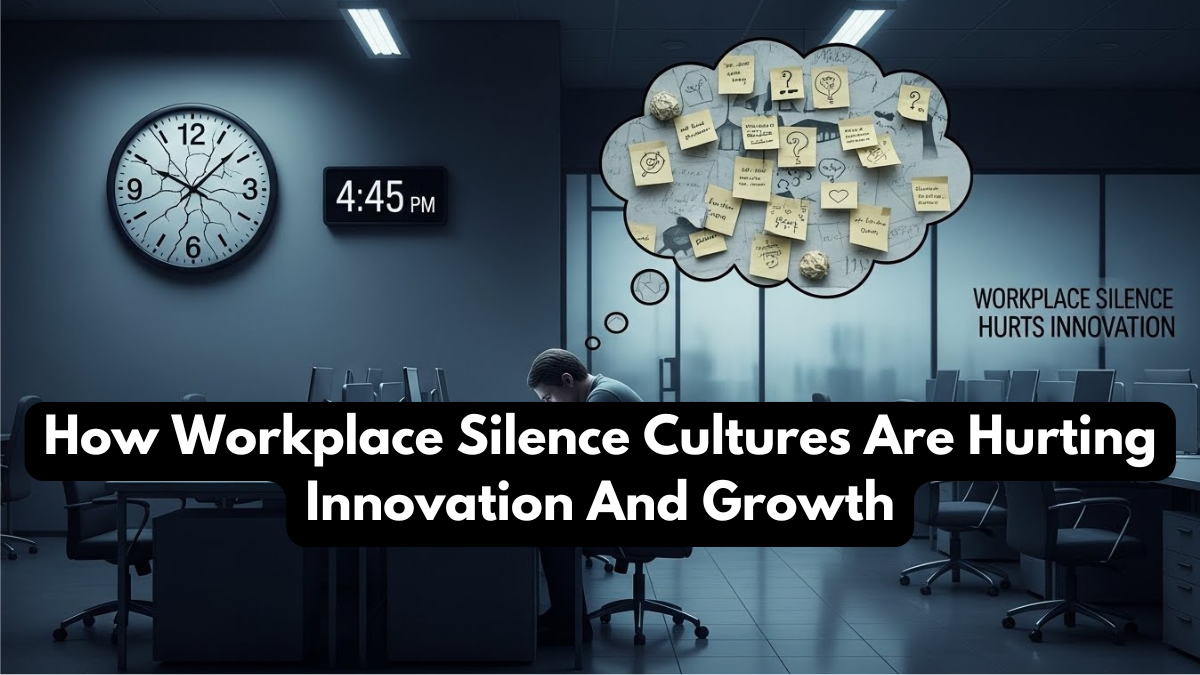
Workplace silence culture is emerging as a hidden but powerful barrier to organizational innovation and sustainable growth. In many organizations, employees hesitate to speak up about problems, ideas, or disagreements due to fear of retaliation, being ignored, or damaging career prospects. This workplace silence culture suppresses valuable insights and prevents organizations from addressing risks early, even when employees clearly recognize issues.
As competition intensifies and adaptability becomes critical, silence is no longer a neutral behavior. When employee voice is absent, leadership decisions are made with incomplete information, increasing the likelihood of strategic missteps. Over time, silence becomes normalized, reinforcing a cycle where concerns go unspoken and opportunities for improvement are missed, accelerating innovation loss across teams.
Employee voice as a driver of innovation
A healthy organization depends on active employee voice, where individuals feel safe sharing ideas, concerns, and feedback. When workplace silence culture takes hold, this voice is muted, limiting creative problem-solving and cross-functional learning. Employees closest to day-to-day operations often hold the most practical insights, yet silence prevents these insights from reaching decision-makers.
The absence of employee voice reduces experimentation and discourages risk-taking. Innovation thrives on dialogue, questioning assumptions, and iterative improvement. In silence-driven environments, employees focus on compliance rather than contribution, leading to measurable innovation loss that weakens competitiveness and adaptability.
Leadership issues that reinforce silence
Leadership issues play a central role in shaping workplace silence culture. When leaders dismiss feedback, punish dissent, or communicate inconsistently, employees learn that speaking up carries risk with little reward. Even subtle behaviors, such as interrupting or failing to acknowledge input, can signal that employee perspectives are unwelcome.
Over time, unresolved leadership issues create psychological distance between management and staff. This distance erodes trust and reinforces silence as a self-protective strategy. Leaders may misinterpret silence as agreement, unaware that critical insights are being withheld. This disconnect accelerates innovation loss and weakens organizational learning.
Innovation loss and long-term growth impact
The most damaging consequence of workplace silence culture is cumulative innovation loss. Ideas that could improve products, processes, or customer experience never surface. Problems persist until they escalate into crises, increasing costs and reputational risk. Silence transforms organizations into reactive systems rather than proactive innovators.
Sustained innovation loss also affects employee morale and retention. Talented individuals who feel unheard are more likely to disengage or leave, taking institutional knowledge with them. Without strong employee voice, organizations struggle to evolve, limiting long-term growth and resilience in changing markets.
Key signs of workplace silence culture include:
- Low participation in meetings
- Limited upward feedback
- Avoidance of difficult conversations
- Repeated unresolved issues
- Declining employee voice and creativity
The table below compares open communication cultures with silence-driven workplaces:
| Aspect | Open Communication Culture | Workplace Silence Culture |
|---|---|---|
| Employee voice | Encouraged | Suppressed |
| Leadership behavior | Receptive | Defensive |
| Innovation | Continuous | Innovation loss |
| Risk detection | Early | Delayed |
| Growth potential | Strong | Constrained |
Breaking silence and rebuilding trust
Addressing workplace silence culture requires intentional action at multiple levels. Leaders must model openness by inviting feedback, responding constructively, and acting on input. Addressing underlying leadership issues signals that speaking up is valued rather than punished.
Organizations can also implement structured feedback channels, anonymous reporting tools, and regular listening sessions to support employee voice. However, tools alone are insufficient without cultural reinforcement. When employees see tangible outcomes from speaking up, silence gradually gives way to participation, reversing patterns of innovation loss.
Building a speak-up culture for growth
Creating a culture that values employee voice is essential for long-term innovation and growth. This involves redefining leadership success to include listening, empathy, and accountability. Training leaders to handle dissent respectfully reduces fear and encourages constructive dialogue.
Over time, dismantling workplace silence culture strengthens trust, collaboration, and creativity. Organizations that address leadership issues and empower employees to contribute openly are better positioned to innovate, adapt, and grow. The ability to surface ideas and concerns early becomes a strategic advantage rather than a vulnerability.
Conclusion
In conclusion, workplace silence culture is hurting innovation and growth by suppressing employee voice, reinforcing leadership issues, and accelerating innovation loss. Silence deprives organizations of critical insight, creativity, and early warning signals. By fostering open communication, addressing leadership behaviors, and valuing employee input, organizations can break the cycle of silence and unlock sustainable innovation and performance.
FAQs
What is workplace silence culture?
Workplace silence culture occurs when employees consistently withhold ideas or concerns due to fear or lack of trust.
Why is employee voice important for innovation?
Employee voice surfaces insights and ideas that drive problem-solving and innovation.
How do leadership issues create silence?
Leadership issues such as dismissiveness or retaliation teach employees that speaking up is unsafe.
What is innovation loss?
Innovation loss refers to missed opportunities caused by suppressed ideas and unresolved problems.
Can workplace silence culture be reversed?
Yes, with transparent leadership, trust-building, and active encouragement of employee voice.
Click here to learn more.