Silence in Cities is increasingly rare as urban environments grow louder, faster, and more crowded. From constant traffic and construction to digital notifications and social noise, modern city dwellers are surrounded by sound almost every waking moment. This constant exposure is deeply tied to the evolving Urban lifestyle, where productivity, connectivity, and movement are prioritized over stillness. What was once taken for granted—quiet moments—has now become a luxury that many actively seek. Understanding why silence is disappearing reveals important truths about modern living and mental well-being.
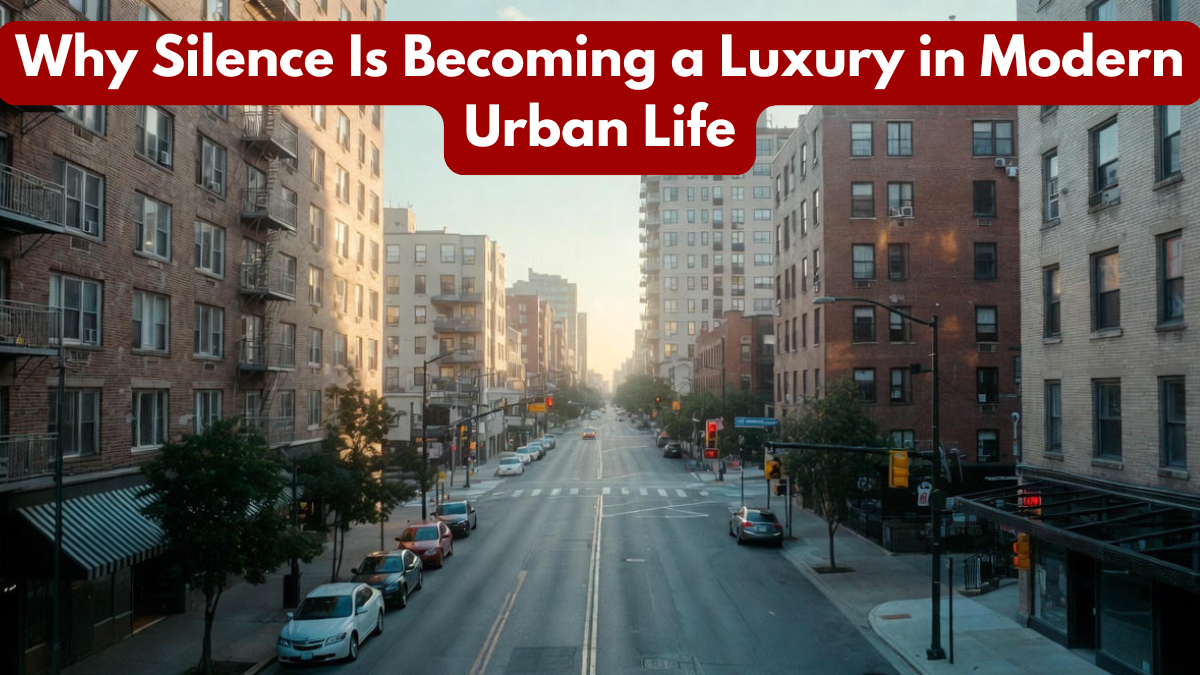
The Growing Noise of Urban Expansion
Rapid urbanization is one of the main reasons Silence in Cities is fading. Expanding populations demand infrastructure, transportation, and housing, all of which contribute to persistent noise. The modern Urban lifestyle thrives on 24/7 activity, meaning cities rarely sleep. Sirens, public transit, nightlife, and commercial operations blur the boundary between day and night.
Common sources of urban noise include:
- Traffic congestion and honking
- Construction and road maintenance
- Public transportation systems
- Dense residential living
As cities grow vertically and horizontally, Silence in Cities becomes harder to preserve, especially in densely populated neighborhoods.
Psychological Impact of Noise on City Dwellers
The absence of Silence in Cities has measurable psychological effects. Research shows that prolonged noise exposure increases stress hormones, disrupts sleep, and reduces concentration. Within the Urban lifestyle, many people normalize this noise without realizing its cumulative impact. Silence allows the brain to rest, process emotions, and recover from constant stimulation.
Without quiet, individuals may experience:
- Mental fatigue and irritability
- Reduced creativity and focus
- Heightened anxiety levels
- Emotional burnout
This explains why many urban residents seek silent retreats, noise-canceling devices, or quiet zones to compensate for the lack of natural silence.
Silence as a New Status Symbol
In today’s Urban lifestyle, access to quiet spaces often reflects privilege. Homes in quieter neighborhoods, soundproof apartments, and private offices are expensive. As Silence in Cities becomes scarce, it gains symbolic value similar to luxury goods. People pay more to escape noise, whether through premium housing, wellness retreats, or travel to remote locations.
The table below shows how silence availability varies across urban settings:
| Urban Environment | Noise Level | Access to Silence |
|---|---|---|
| City center | Very high | Very limited |
| Residential areas | Moderate | Occasional |
| Suburban zones | Low | Frequent |
| Private retreats | Minimal | High |
This comparison highlights how Silence in Cities is unevenly distributed within modern urban spaces.
Technology and the Loss of Quiet Moments
Technology plays a dual role in shaping Silence in Cities. While it connects people, it also fills quiet moments with digital noise. Notifications, background media, and constant connectivity define the modern Urban lifestyle. Even when physical noise is absent, digital interruptions prevent true silence.
This constant stimulation:
- Reduces attention span
- Increases cognitive overload
- Limits self-reflection
- Disrupts mindfulness
As a result, silence is no longer just about sound but about mental space—something increasingly difficult to achieve in cities.
Reclaiming Silence in Urban Living
Despite these challenges, people are finding ways to reclaim Silence in Cities. Urban planners are introducing quiet zones, green spaces, and noise regulations. Individuals within the Urban lifestyle are also adopting practices like meditation, digital detoxes, and intentional solitude. These efforts reflect a growing awareness that silence is essential, not optional.
Practical ways cities and individuals reclaim silence include:
- Designing parks and car-free zones
- Using sound-absorbing architecture
- Setting boundaries with technology
- Prioritizing quiet routines at home
These strategies show that silence can still exist, even within bustling cities, when intentionally protected.
Conclusion: Silence as a Human Need, Not a Luxury
Silence in Cities is becoming rare, but its value has never been higher. In the context of a demanding Urban lifestyle, silence supports mental clarity, emotional balance, and overall health. Treating silence as a basic human need rather than a luxury could reshape how cities are designed and how people live within them. As urban life continues to accelerate, preserving moments of quiet may be one of the most important challenges of modern society.
FAQs
Why is Silence in Cities disappearing?
Urban growth, infrastructure expansion, and constant activity associated with Urban lifestyle reduce opportunities for quiet environments.
How does noise affect mental health?
Lack of silence increases stress, disrupts sleep, and reduces emotional regulation, according to studies on urban living.
Is silence more important now than before?
Yes, because modern Urban lifestyle involves constant stimulation, making silence essential for mental recovery.
Can cities be designed to include more silence?
Urban planners can incorporate green spaces, noise regulations, and sound-conscious architecture to preserve Silence in Cities.
How can individuals find silence in urban life?
Practices like mindfulness, limiting digital noise, and seeking quiet public spaces help individuals reconnect with silence.
Click here to learn more.