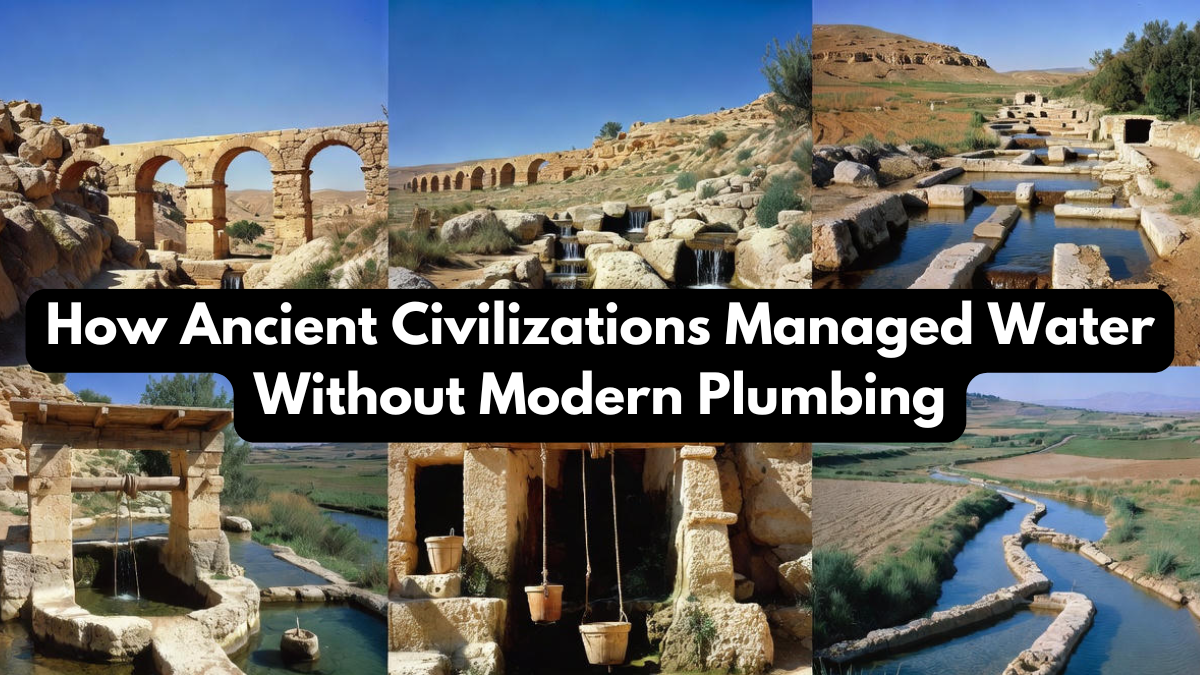
Ancient Water Systems reveal the extraordinary intelligence of early civilizations that thrived without pipes, pumps, or electric infrastructure. Long before modern plumbing, societies across the world developed ingenious methods to collect, store, transport, and purify water. These solutions were not accidental but the result of advanced Historical engineering shaped by geography, climate, and necessity. From desert settlements to river-based cities, water management determined survival, urban growth, and public health. Understanding these systems highlights how ancient knowledge continues to influence modern engineering principles.
The Foundations of Early Water Management
At the heart of Ancient Water Systems was a deep understanding of natural water cycles. Civilizations observed rainfall patterns, groundwater movement, and seasonal rivers. Historical engineering practices emerged through trial, error, and accumulated wisdom passed across generations. Many early societies built settlements near reliable water sources while also preparing for droughts and floods.
Key foundational techniques included:
- Gravity-based water flow using slopes
- Rainwater harvesting from rooftops and courtyards
- Underground channels to reduce evaporation
- Stone and clay materials to prevent leakage
These methods allowed Ancient Water Systems to function efficiently for centuries, often with minimal maintenance.
Ingenious Structures Built by Ancient Civilizations
Some of the most impressive examples of Ancient Water Systems come from large-scale infrastructure projects. Aqueducts, qanats, stepwells, and reservoirs demonstrate how Historical engineering transformed landscapes to serve human needs. Roman aqueducts transported water across vast distances using precise gradients, while Persian qanats tapped underground aquifers to bring water to arid regions without surface exposure.
Different civilizations specialized in different solutions:
- Romans focused on aqueducts and public baths
- Indus Valley cities used covered drains and household wells
- Mayans created reservoirs and filtration systems
- Ancient Chinese engineers built canals for irrigation and flood control
Each system reflects how Historical engineering adapted to local environmental challenges.
Comparing Ancient Water Technologies
The effectiveness of Ancient Water Systems can be better understood through comparison. The table below outlines how various civilizations approached water management:
| Civilization | Water System Type | Engineering Principle | Primary Purpose |
|---|---|---|---|
| Roman | Aqueducts | Gravity flow | Urban supply |
| Persian | Qanats | Underground channels | Desert survival |
| Indus Valley | Covered drains | Sanitation design | Public health |
| Mayan | Reservoirs | Rainwater capture | Seasonal storage |
This comparison shows how Historical engineering was not universal but customized to environmental and social needs.
Social and Cultural Importance of Water Systems
Beyond survival, Ancient Water Systems shaped social organization, governance, and culture. Control of water often meant political power. Historical engineering projects required coordinated labor, skilled planning, and long-term vision. Public fountains, baths, and irrigation canals became symbols of prosperity and civic pride.
Water systems also influenced:
- Agricultural productivity
- Urban planning and population density
- Religious rituals and purification practices
- Trade and economic stability
The success of many ancient cities depended directly on the reliability of their Ancient Water Systems.
Lessons for the Modern World
Modern engineers increasingly look to Ancient Water Systems for sustainable solutions. Historical engineering emphasized efficiency, local materials, and harmony with nature—principles that align with today’s sustainability goals. As climate change strains modern infrastructure, ancient techniques like rainwater harvesting and gravity-fed distribution are being revived.
By studying these systems, modern societies can:
- Reduce energy dependence
- Improve water resilience
- Design climate-adaptive infrastructure
- Preserve ecological balance
The longevity of Ancient Water Systems proves their effectiveness even by modern standards.
Conclusion: Timeless Intelligence in Ancient Design
Ancient Water Systems stand as powerful evidence that innovation does not depend on modern technology alone. Through keen observation and Historical engineering, ancient civilizations created resilient, efficient, and sustainable water solutions. Their achievements remind us that progress often comes from understanding nature rather than overpowering it. As the world faces growing water challenges, revisiting ancient wisdom may offer some of the most practical answers for the future.
FAQs
What are Ancient Water Systems?
Ancient Water Systems refer to the methods and structures developed by early civilizations to manage water supply, sanitation, and irrigation without modern plumbing.
How did Historical engineering influence water management?
Historical engineering combined observation, mathematics, and local materials to create efficient water systems adapted to specific environments.
Are ancient water systems still used today?
Yes, some Ancient Water Systems like qanats and rainwater harvesting are still in use or have been modernized in various regions.
Why were Ancient Water Systems so durable?
They relied on gravity, simple mechanics, and sustainable materials, which reduced mechanical failure and maintenance needs.
Can modern cities learn from Historical engineering?
Absolutely. Historical engineering offers sustainable, low-energy solutions that are increasingly relevant in addressing modern water scarcity.
Click here to learn more.