As climate awareness grows and environmental monitoring becomes increasingly important, artists and engineers are turning to kinetic sculptures as powerful tools for interpreting natural data. These rotating, moving, or wind-responsive structures serve not only as artistic landmarks but also as functional instruments for environmental visualization. By converting numerical data into motion, light, or shape transformation, kinetic designs make scientific information accessible and emotionally engaging for the public. This blend of art and technology is helping communities visualize the invisible forces shaping our world.
The Role of Movement in Interpreting Environmental Patterns
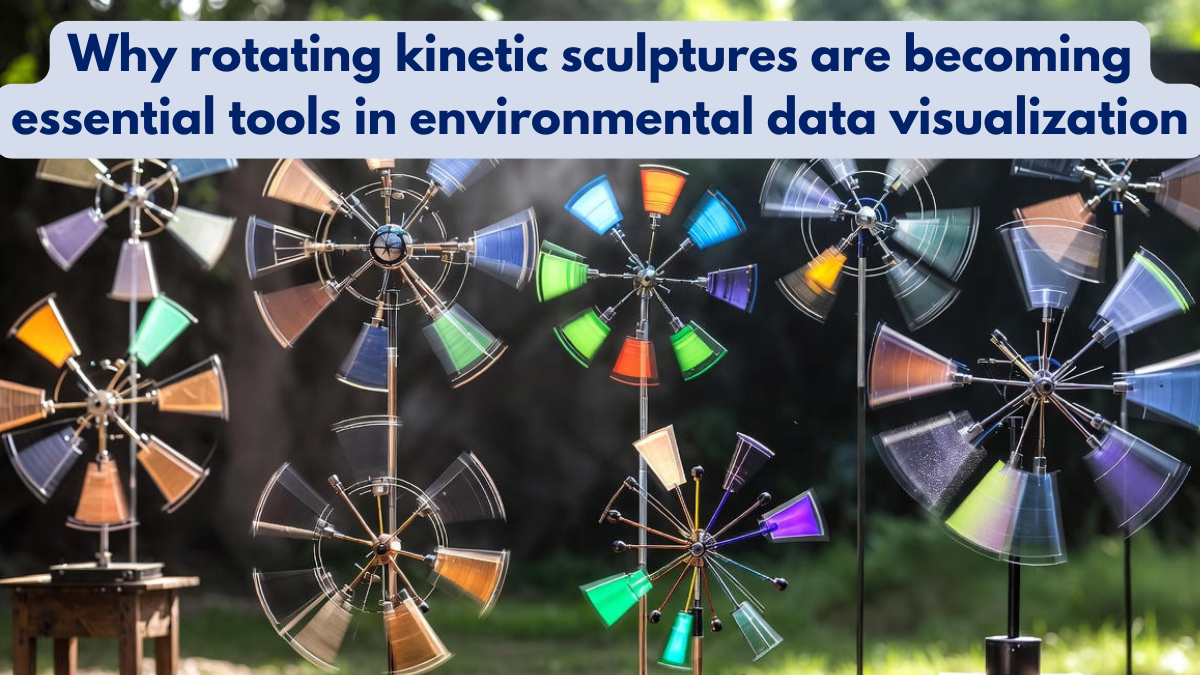
The unique appeal of kinetic sculptures lies in their ability to turn complex environmental patterns into observable physical motion. Instead of relying solely on digital screens or graphs, communities can watch these sculptures shift rhythmically in response to wind speed, air quality, water currents, or temperature variations. This makes environmental visualization more intuitive and immediate. For example, a sculpture may spin faster when pollution levels rise or change color based on seasonal biodiversity data. This kind of interaction enables a deeper emotional connection to changing environmental conditions.
Bridging Art, Science, and Public Awareness
Modern cities are increasingly using kinetic sculptures to translate scientific measurements into public displays. These installations often stand in plazas, coastal walkways, or research centers, acting as beacons of environmental visualization for residents and visitors. Because they are visually captivating, kinetic artworks encourage people to stop, observe, and reflect on ongoing ecological changes. They serve as continuous, real-time educational tools that do not require technical expertise to understand. This bridge between artistic creativity and environmental science strengthens public engagement and inspires more responsible behavior.
Engineering Techniques Behind Responsive Sculptures
The technological side of kinetic sculptures has advanced significantly in recent years. Artists now collaborate with environmental engineers to integrate sensors, motors, and flexible materials into their designs. These features allow sculptures to react dynamically to local atmospheric or water conditions, creating a form of living art. Through environmental visualization, data such as humidity, solar radiation, or wind pressure becomes part of a sculpture’s movement pattern. As a result, each installation serves as both a functional scientific monitor and a cultural centerpiece.
Table: Types of Environmental Data Represented Through Kinetic Sculptures
The table below demonstrates how various ecological factors are conveyed through the motion and structure of kinetic sculptures, reinforcing their value as environmental visualization tools.
| Environmental Factor | How Data Is Collected | How Kinetic Sculpture Responds | Visualization Benefit |
|---|---|---|---|
| Wind Speed | Wind sensors | Increased rotation or oscillation | Shows real-time atmospheric activity |
| Air Quality | Pollution detectors | Color or motion changes | Visual alert for pollution levels |
| Solar Intensity | Light sensors | Expansion or contraction patterns | Represents sun exposure fluctuations |
| Water Flow | Aquatic sensors | Wave-like movement | Illustrates river or tide conditions |
These examples highlight how kinetic sculptures transform abstract measurements into visual narratives that enrich environmental visualization in public and scientific settings.
Future Applications and Expanding Impact
As environmental concerns continue to rise globally, the future of kinetic sculptures looks increasingly promising. Emerging materials like shape-memory alloys and programmable fibers will allow sculptures to adapt even more intricately to surrounding ecological signals. Cities may deploy large-scale moving installations as part of pollution tracking networks, storm surge alerts, or climate-responsive public art trails. For museums, research facilities, and community spaces, such sculptures will offer new possibilities for immersive environmental visualization, making nature’s hidden fluctuations tangible and inspiring greater ecological awareness.
Conclusion
The growing integration of kinetic sculptures into scientific and public spaces demonstrates the importance of visual storytelling in understanding environmental change. Their ability to convert raw data into expressive movement makes them valuable tools for environmental visualization, bridging the gap between scientific information and public comprehension. As innovation continues and environmental needs evolve, kinetic artistry will remain at the forefront of creative communication, helping communities witness the dynamic forces shaping our planet.
FAQs
How do kinetic sculptures support environmental visualization?
They convert scientific data into visible movement, helping people understand environmental changes without relying on technical charts.
Why are rotating kinetic sculptures used in public spaces?
They attract attention while providing continuous environmental visualization, allowing communities to observe real-time ecological patterns.
Do kinetic sculptures require advanced technology to function?
Some rely on simple wind-driven mechanics, while others incorporate sensors and smart systems to enhance their environmental visualization capabilities.
Can kinetic sculptures help educate communities?
Yes, they make environmental information more relatable, encouraging people to observe and understand climate behaviors through artistic motion.
Click here to learn more.