The deep ocean remains one of the most mysterious and unexplored regions on Earth, home to extraordinary deep sea creatures that survive where most forms of life would instantly perish. These animals thrive in places with freezing temperatures, complete darkness, and pressure so intense that it could crush submarines. Their remarkable ability to adapt has fascinated scientists for decades, and one of the most studied aspects is how they achieve extraordinary ocean pressure survival. These adaptations not only reveal the resilience of nature but also offer insights that may inspire future scientific advancements.
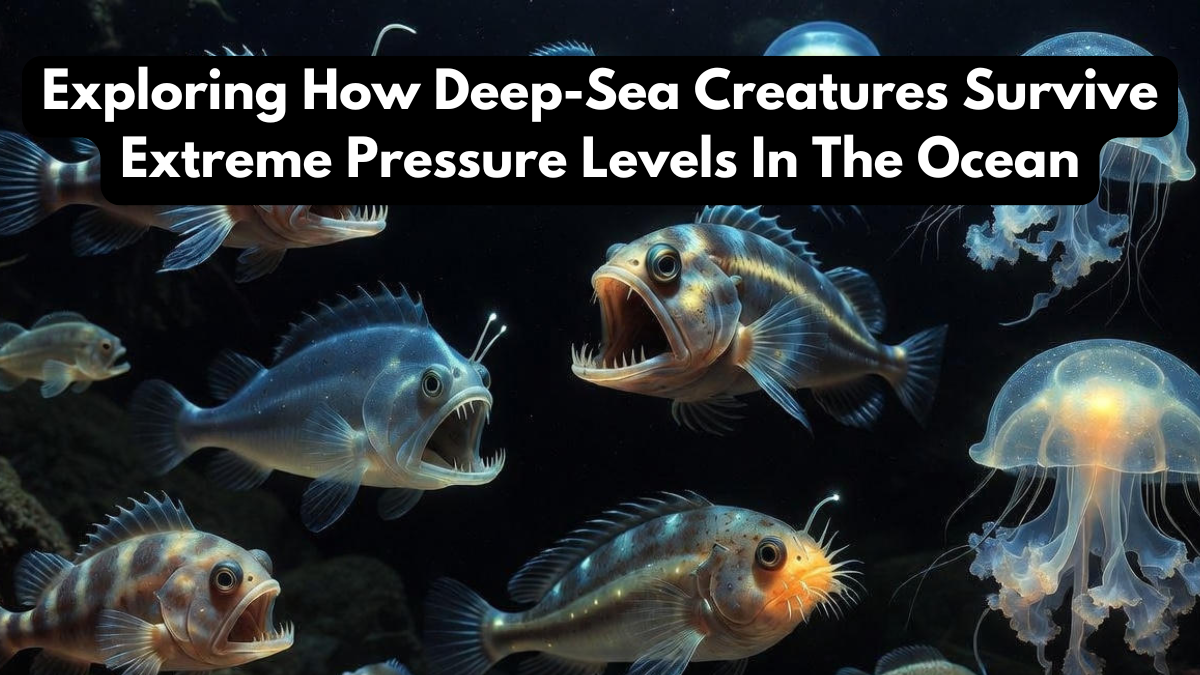
How Deep-Sea Creatures Survive Intense Pressure
Surviving at extreme depths requires unique and highly specialized adaptations. Deep sea creatures are built differently from animals at the surface. Their bodies do not contain air-filled organs that would collapse under enormous pressure. Instead, they have soft tissues, flexible structures, and cellular components that remain stable even when exposed to crushing conditions. This is a fundamental part of ocean pressure survival, helping them maintain normal function despite the unbelievable pressure around them.
Another key factor is the presence of special proteins and molecules that prevent vital enzymes from breaking down under high pressure. These biochemical defenses allow metabolic processes to continue normally in environments that would be lethal to most marine life. These remarkable traits highlight how evolution has enabled deep sea creatures to occupy one of the most extreme habitats on the planet.
Unique Adaptations Found in Deep-Sea Life
The physical and chemical adaptations of deep sea creatures seem almost otherworldly, yet each plays a critical role in ensuring ocean pressure survival. Many species have reduced skeletal structures, slow metabolisms, and gel-like bodies that resist compression. Others possess light-emitting organs used for hunting, communication, or camouflage in complete darkness. These adaptations offer a better understanding of how life can endure even the harshest environments.
Here is a table demonstrating key adaptations of deep-sea life:
| Adaptation | Purpose | Benefit |
|---|---|---|
| Soft, Flexible Bodies | Pressure resistance | Prevents tissue damage |
| Bioluminescence | Hunting and signaling | Conserves energy in darkness |
| Slow Metabolism | Low energy use | Allows survival where food is scarce |
| Pressure-Resistant Proteins | Cellular stability | Supports vital functions |
These remarkable adaptations reveal how evolution has shaped deep sea creatures into some of the toughest organisms on Earth.
The Chemical Secrets Behind Ocean Pressure Survival
The success of ocean pressure survival depends largely on biochemical adjustments that protect cells and proteins. One of the most important elements is the production of piezolytes—special molecules that prevent proteins from folding incorrectly under pressure. Without these molecules, the internal systems of deep sea creatures would malfunction rapidly at great depths. Piezolytes act like natural shields that preserve cellular health and ensure survival.
Additionally, many deep-sea organisms have unique circulatory systems, slow respiration rates, and efficient energy use, enabling them to live comfortably in low-oxygen conditions. These chemical adaptations work hand-in-hand with physical modifications, showing how deeply specialized deep sea creatures are for their environment.
Why Studying Deep-Sea Creatures Matters
Studying deep sea creatures allows scientists to explore new ideas in biology, chemistry, engineering, and environmental science. Their extraordinary ocean pressure survival abilities inspire the development of pressure-resistant materials, deep-sea exploration devices, and even medical innovations. Each discovery expands our knowledge of Earth’s biodiversity and highlights the importance of preserving deep-ocean ecosystems.
The deep sea is one of the least explored places on the planet, and researchers believe thousands of species remain undiscovered. Protecting the habitats of deep sea creatures is essential, especially as climate change, pollution, and mining activities pose increasing threats to these fragile environments.
Conclusion
The survival strategies of deep sea creatures demonstrate the incredible adaptability of life on Earth. Their physical, chemical, and biological traits allow them to withstand crushing pressure, freezing temperatures, and total darkness. These extraordinary ocean pressure survival mechanisms continue to fascinate researchers and drive new scientific discoveries. As exploration of the deep ocean expands, the world will learn even more about these remarkable animals and the hidden secrets of the underwater world.
FAQs
How do deep sea creatures survive the crushing pressure of the deep ocean?
They have flexible bodies, no air cavities, and special proteins that protect their cells from pressure damage.
Why is ocean pressure survival important for scientists to study?
It helps researchers understand how life adapts to extreme environments and inspires new technologies.
Do all deep sea creatures use bioluminescence?
Not all, but many rely on it for hunting, communication, or protection in dark waters.
How do slow metabolisms help with ocean pressure survival?
Slow metabolisms reduce energy needs, allowing animals to survive where food is very limited.
Are new deep sea creatures still being discovered?
Yes, scientists believe thousands of species are still undiscovered due to the vast unexplored deep ocean.
Click here to learn more.