The rise of wildlife tracking india is transforming how national parks monitor, protect, and conserve their animal populations. With increasing threats such as poaching, habitat loss, and climate change, India urgently needs advanced solutions to protect its biodiversity. This is where conservation technology plays a powerful role, enabling real-time monitoring of animal movements, health patterns, migratory routes, and potential dangers. India’s forests and protected reserves are now embracing satellite collars, camera traps, drones, and AI-driven analytics to secure endangered species and restore ecological balance.
This major shift is reshaping wildlife management. Instead of relying solely on manual patrols and outdated tracking methods, authorities can now use data-driven insights to predict behavior, prevent threats, and respond faster during emergencies. The integration of wildlife tracking india is helping protect everything from tigers and elephants to rhinos, leopards, and rare bird species.
Why Conservation Technology Is Becoming Essential
The adoption of conservation technology is crucial because traditional conservation methods cannot keep up with rising threats. Poachers today use sophisticated tools, making manual patrolling insufficient. Additionally, climate change has altered animal migration patterns, making tracking more complex. Smart tracking technology solves these issues by offering 24/7 surveillance, automated alerts, and long-term behavioral data.
This progress strengthens the impact of wildlife tracking india, especially in remote national parks where human access is limited. With advanced sensors and GPS-enabled collars, forest officers can understand an animal’s movement range, detect distress, and prevent conflicts with nearby villages. This technological support is essential for ensuring the survival of India’s most vulnerable species.
Key Components of India’s Wildlife Tracking Systems
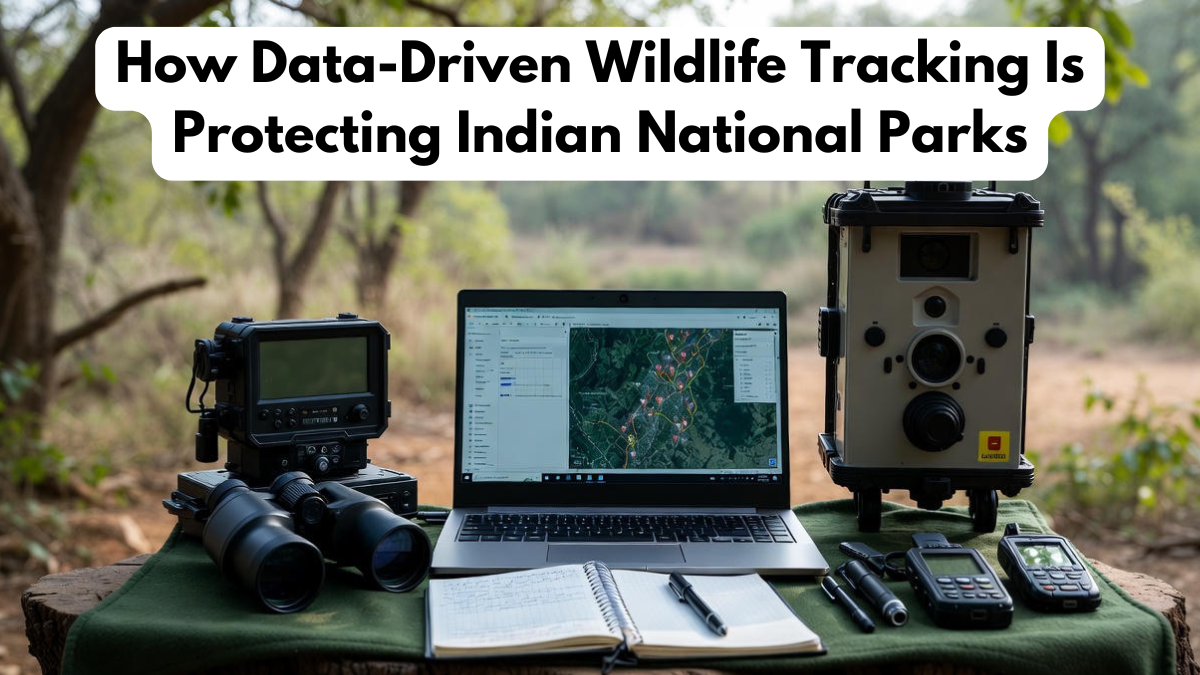
Wildlife tracking involves a combination of sensors, monitoring devices, and data analytics tools. These innovations make conservation technology more efficient and manageable for forest departments. From drones to camera traps and AI platforms, each tool plays a specific role in conservation.
Below is a table showing the major components of wildlife tracking india:
| Component | Description | Role in Conservation |
|---|---|---|
| GPS Collars | Lightweight collars placed on animals | Track movement and migration routes |
| Camera Traps | Motion-activated cameras | Capture animal behavior and detect threats |
| Drones & Aerial Surveillance | Unmanned drones monitoring forest zones | Identify poaching activities and illegal trespassing |
| Acoustic Sensors | Devices that track animal sounds | Detect distress calls or unusual activity |
| AI-Powered Data Platforms | Analyze animal data and predict patterns | Supports decision-making for forest officers |
These tools help authorities take precise actions, making conservation technology indispensable in modern wildlife management.
How Wildlife Tracking Protects National Parks
The implementation of the wildlife tracking india model brings numerous advantages to national parks. One of the biggest benefits is conflict prevention. In regions where elephants or big cats frequently enter human settlements, tracking technology sends alerts before animals reach danger zones. This allows forest officials and villagers to take timely precautions, safeguarding both humans and wildlife.
Another important impact is improved anti-poaching measures. Drones, AI systems, and camera traps help detect suspicious movement instantly, enabling officers to respond quickly. The presence of conservation technology acts as a major deterrent for illegal hunters. These tools also support scientific research by providing long-term data on reproduction, territorial habits, and environmental changes.
Challenges in Wildlife Tracking and Conservation
Despite remarkable progress, several challenges hinder the expansion of wildlife tracking india. Some forests have limited internet connectivity, making real-time data transmission difficult. Harsh terrains and unpredictable weather conditions also damage tracking equipment. Additionally, the cost of advanced trackers and drones can be high for smaller reserves.
Another challenge is training—forest staff must learn how to operate devices, interpret data, and maintain equipment. Still, the increasing adoption of conservation technology across India shows that these challenges are being addressed through collaborations between government bodies, NGOs, tech companies, and academic institutions. With more investment, tracking systems will continue to become more reliable and affordable.
Conclusion
The rise of wildlife tracking india highlights a powerful transformation in India’s conservation landscape. By integrating modern tools such as GPS tracking, drones, AI, and acoustic sensors, the country is better equipped to protect endangered species and maintain ecological balance. Supported by advanced conservation technology, national parks can now predict threats, prevent conflicts, and safeguard wildlife more efficiently. As India continues to innovate, these technologies will play a vital role in preserving biodiversity for future generations.
FAQs
What is wildlife tracking in India?
It refers to using technology to monitor animal movements, behavior, and safety in forests and national parks.
Why is conservation technology important?
Conservation technology helps prevent poaching, reduce human-wildlife conflicts, and support long-term ecological research.
What devices are used for wildlife tracking?
GPS collars, camera traps, drones, acoustic sensors, and AI platforms are commonly used in wildlife tracking india.
How do tracking tools help forest officials?
They provide real-time alerts, movement data, and predictive analytics that improve response times and decision-making.
Is wildlife tracking used in all Indian national parks?
Not yet, but many parks are rapidly adopting wildlife tracking india systems to improve conservation efforts.
Click here to learn more.