In the ever-evolving digital landscape, the concept of smartphone satellite internet is reshaping how the world connects. Traditional mobile networks rely on terrestrial cell towers that often fail to reach remote or rural areas. However, with the emergence of satellite-based communication, connectivity is no longer limited by geography. Using space communication technology, smartphones can now connect directly to orbiting satellites, ensuring uninterrupted internet access from virtually anywhere on the planet — deserts, oceans, mountains, or disaster zones. This innovation represents a monumental step forward, promising a world where communication truly knows no boundaries.
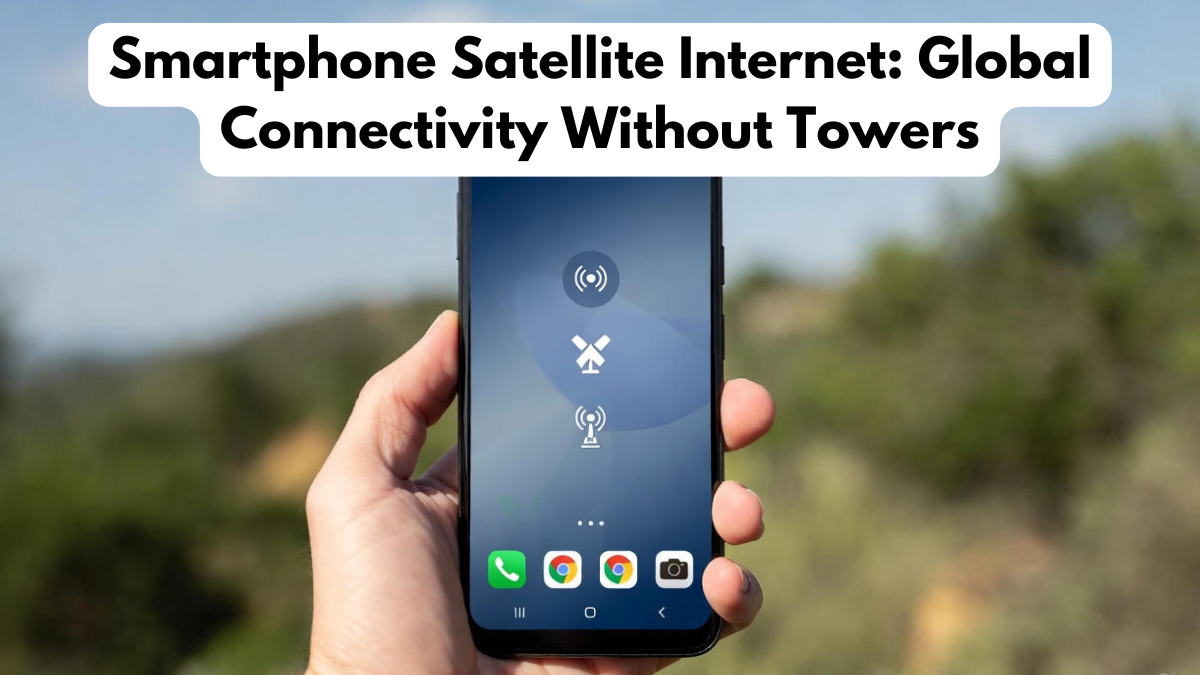
Understanding Smartphone Satellite Internet
Smartphone satellite internet allows mobile devices to connect directly to satellites in orbit, bypassing traditional mobile infrastructure. These satellites, positioned in Low Earth Orbit (LEO), serve as data relays that provide internet connectivity across vast regions, including areas without cellular towers or fiber networks.
Unlike conventional networks that depend on proximity to towers, this system uses space communication to transmit signals between smartphones and orbiting satellites. The result is a global coverage network capable of delivering basic internet, messaging, and voice services even in the most isolated locations.
Key features of smartphone satellite internet include:
- Reliable connectivity in remote or rural areas
- Integration with existing smartphone hardware and software
- Enhanced emergency communication capabilities
- Support for global roaming without traditional mobile carriers
- Integration with advanced space communication protocols for low-latency connections
This groundbreaking development is making the dream of universal internet access closer to reality than ever before.
How Smartphone Satellite Internet Works
The functioning of smartphone satellite internet depends on complex coordination between satellites, ground stations, and mobile devices. When a smartphone transmits a signal, it is sent directly to a nearby satellite in orbit. The satellite then forwards the signal to a ground-based network station, which connects to the broader internet. The reverse process enables users to receive data, messages, and calls through space communication channels.
Here’s a table summarizing the process and technology behind smartphone satellite internet:
| Component | Function | Role in Space Communication |
|---|---|---|
| Low Earth Orbit (LEO) Satellites | Orbit 500–2000 km above Earth | Enable fast and stable data transmission |
| Satellite Antennas | Receive and transmit data signals | Bridge communication between phone and orbit |
| Ground Stations | Connect satellite network to global internet | Maintain data routing and signal integrity |
| Smartphone Modem | Sends and receives satellite signals | Allows direct device-to-satellite communication |
| AI and Routing Algorithms | Manage global network traffic | Optimize latency and bandwidth efficiency |
Unlike older geostationary satellites, which suffered from high latency due to distance, modern LEO satellite systems drastically reduce delays, making real-time space communication possible for smartphones.
Benefits of Smartphone Satellite Internet
The introduction of smartphone satellite internet has far-reaching benefits for global communication and digital inclusion. By removing the dependence on terrestrial networks, this technology provides connectivity to people in regions where mobile infrastructure is limited or nonexistent.
Key Benefits:
- Universal Connectivity: Provides internet access to remote regions, oceans, and mountains.
- Disaster Resilience: Ensures communication during emergencies when cell towers are damaged or offline.
- Cost Efficiency: Reduces the need for expensive tower construction and maintenance in rural areas.
- Enhanced Mobility: Allows users to remain connected while traveling across borders or remote regions.
- Global Integration: Supports worldwide connectivity using space communication standards.
This innovation also benefits industries like shipping, aviation, and mining, which operate in remote environments and require reliable global communication systems.
Challenges and Future Prospects
Despite its incredible potential, smartphone satellite internet faces several challenges before achieving global adoption. One major obstacle is the cost of launching and maintaining satellite constellations. Companies like SpaceX (Starlink), AST SpaceMobile, and Globalstar are investing billions in deploying LEO satellite networks, but scaling these systems remains an expensive and complex task.
Challenges include:
- High Infrastructure Costs: Satellite manufacturing and deployment require significant investment.
- Limited Bandwidth: Current systems offer lower data speeds than terrestrial networks.
- Device Compatibility: Not all smartphones currently support direct satellite connectivity.
- Regulatory Barriers: Cross-border space communication regulations can vary by country.
However, rapid advancements in AI-driven network optimization, nanosatellite development, and 5G integration are addressing these limitations. In the near future, smartphone manufacturers are expected to integrate satellite-ready antennas and modems into most flagship devices, enabling seamless switching between cellular and satellite networks.
The Future of Space Communication and Connectivity
The future of smartphone satellite internet lies in a fully interconnected global network where space-based and terrestrial systems work together. As space communication technology advances, users will experience faster speeds, lower latency, and more affordable satellite services. This hybrid model will allow smartphones to automatically connect to satellites when mobile signals are weak, ensuring uninterrupted connectivity.
Emerging developments to look forward to include:
- AI-optimized satellite routing for faster data transfers.
- 5G and 6G satellite integration for near-zero latency.
- Nano-satellite constellations offering localized coverage for smart cities.
- Direct-to-device technology, removing the need for external satellite modems.
- Global partnerships between satellite providers and smartphone manufacturers to expand accessibility.
By 2030, it’s expected that smartphone satellite internet will cover nearly the entire globe, making space communication the backbone of universal digital connectivity.
Conclusion
Smartphone satellite internet represents the dawn of a new era in communication — one where connectivity transcends physical boundaries. Through the power of space communication, smartphones can now stay online anywhere on Earth, providing life-saving communication in emergencies and expanding access to billions who remain offline. While challenges related to cost and infrastructure persist, ongoing innovation and collaboration among tech giants and space agencies are rapidly closing the gap. The future of global connectivity lies beyond towers — in the stars — where satellites orbit to connect every corner of the world, one signal at a time.
FAQs
What is smartphone satellite internet?
Smartphone satellite internet allows mobile devices to connect directly to orbiting satellites, providing internet access without relying on cell towers.
How does space communication enable global connectivity?
Space communication uses satellites in orbit to transmit signals between smartphones and ground stations, ensuring coverage across the entire planet.
Can all smartphones connect to satellites?
Currently, only select models support satellite connectivity, but future smartphones will include built-in satellite communication capabilities.
Is satellite internet faster than regular mobile networks?
While not yet faster than 5G, modern satellite networks offer impressive speeds and low latency, suitable for browsing, messaging, and emergency communication.
What is the future of smartphone satellite internet?
The future will see global satellite coverage, faster speeds, and integration with 5G and 6G networks, making seamless global space communication a reality.
Click here to learn more