The relationship between humans and machines is evolving rapidly, and nowhere is this transformation more evident than in wearable tech EV integration. The future of driving is not just about smart cars—it’s about smart drivers too. As electric vehicles become more advanced, they’re connecting seamlessly with wearable devices to create connected driving experiences that are personal, safe, and highly intuitive. From smartwatches that unlock cars to fitness trackers that adjust vehicle settings based on mood or stress levels, wearable technology is transforming the way drivers interact with their vehicles.
In 2026 and beyond, wearable tech EV systems are becoming a major part of the automotive industry’s digital revolution. By linking smart devices such as rings, watches, and even clothing to electric vehicles, drivers can enjoy unparalleled convenience and safety. These devices act as digital extensions of the driver, gathering biometric and behavioral data to personalize everything from cabin temperature to driving modes. As connected driving evolves, vehicles are no longer just transportation tools—they’re becoming intelligent companions designed around the driver’s physical and emotional state.
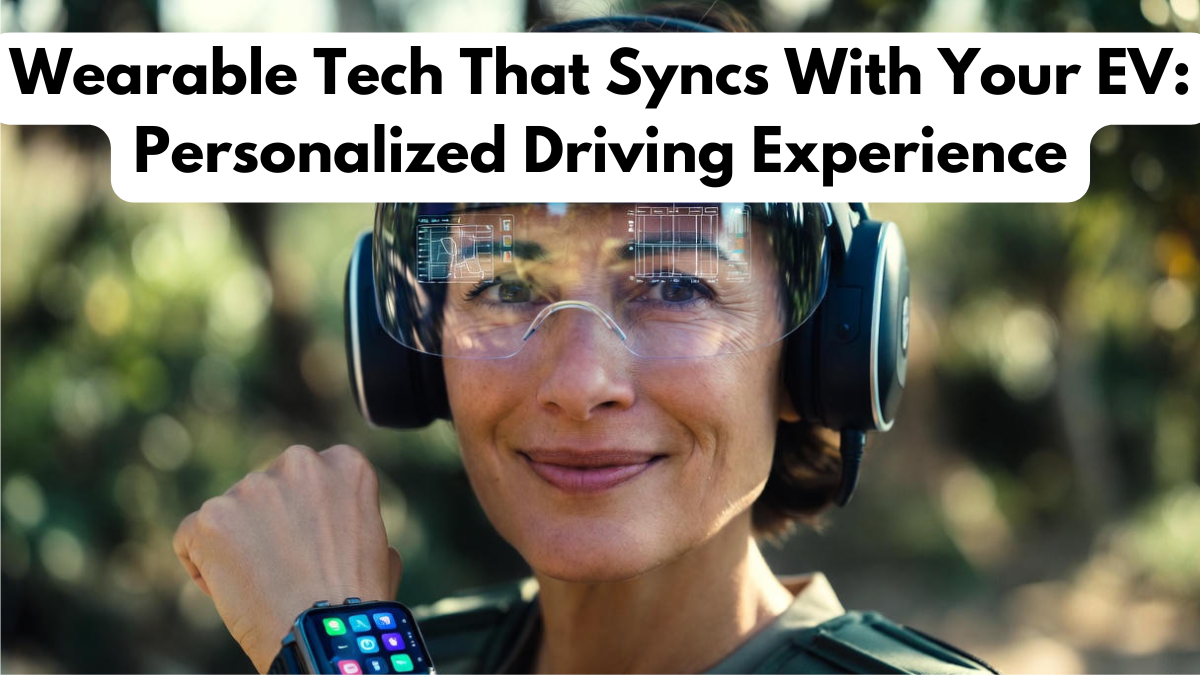
The Evolution of Wearable Tech and Connected Driving
The journey toward wearable tech EV innovation started with basic smartphone connectivity but has now expanded to advanced biometric integration. Modern wearables collect data such as heart rate, body temperature, stress levels, and even sleep patterns. When connected to electric vehicles, this information enables connected driving systems to automatically adjust vehicle settings for comfort, efficiency, and safety.
For example, if a smartwatch detects fatigue, the EV can suggest rest stops or activate driver assistance systems. Similarly, if stress levels rise, the car’s AI might adjust ambient lighting, play calming music, or modify suspension settings for a smoother ride. Wearable tech EV technology thus bridges the gap between physical well-being and automotive performance.
Key features driving the rise of wearable tech EV systems include:
- Biometric integration: Vehicles adjust to driver health and mood in real time.
- Remote vehicle control: Unlock, start, or locate your car using wearable devices.
- Seamless infotainment: Personalized playlists and app synchronization via wearables.
- Safety enhancements: Real-time alerts for fatigue, health issues, or emergencies.
- Predictive personalization: AI learns from driver habits to improve future experiences.
These innovations make connected driving not just about mobility, but about building a smarter relationship between humans and machines.
Comparison Between Traditional and Wearable-Integrated Driving
To understand how wearable tech EV is transforming the automotive experience, let’s compare traditional driving systems with wearable-integrated connected driving models.
| Feature | Traditional Driving | Wearable Tech EV Integration |
|---|---|---|
| Vehicle Access | Keys or smartphones | Smartwatch, ring, or biometric recognition |
| Health Monitoring | None | Continuous via wearable sensors |
| Personalization | Manual settings | Automatic based on real-time data |
| Safety Assistance | Reactive alerts | Predictive AI-driven connected driving |
| Comfort Adjustments | User-controlled | Dynamic, based on physical or emotional state |
| Connectivity | Basic Bluetooth | Multi-device IoT ecosystem |
This comparison highlights how wearable tech EV systems provide drivers with smarter, more efficient, and adaptive connected driving experiences that merge technology with human intuition.
The Role of AI and IoT in Wearable Tech EV Systems
Artificial intelligence (AI) and the Internet of Things (IoT) are the driving forces behind wearable tech EV innovation. These technologies allow devices to communicate seamlessly with vehicles, creating an intelligent data loop. For example, a smartwatch connected to an EV via IoT sensors can analyze the driver’s heart rate and body temperature to determine stress levels. If AI detects fatigue, it can activate autonomous driving assistance or suggest a coffee stop.
This level of connected driving intelligence ensures that every trip is both safe and comfortable. Additionally, wearable technology enhances predictive maintenance by analyzing driver behavior and environmental conditions. The data collected from wearable tech EV systems helps manufacturers improve future vehicle models, ensuring continuous innovation.
AI also enables customization beyond health tracking. It integrates with voice assistants, navigation, and infotainment systems to create fully immersive digital environments. When combined with IoT networks, these wearable tech EV solutions create a seamless ecosystem between the driver, the car, and the cloud.
The Future of Connected Driving and Wearable Integration
The future of wearable tech EV systems lies in deeper integration between personal devices and electric vehicles. As connected driving continues to evolve, we will see vehicles capable of learning from driver behavior and adapting to individual preferences automatically. By 2030, experts predict that over 70% of new EVs will support wearable synchronization, transforming how humans interact with technology on the road.
Next-generation wearables will feature advanced sensors capable of monitoring brain waves, hydration levels, and even emotions. Cars will use this data to tailor every aspect of the journey, from lighting and sound to autopilot sensitivity. Wearable tech EV integration will also play a key role in safety innovations, including real-time health diagnostics that could automatically alert emergency services in case of accidents or medical emergencies.
This futuristic vision of connected driving is one where human wellness and vehicle intelligence work in perfect harmony. Drivers will no longer have to adapt to cars—cars will adapt to them.
Conclusion
Wearable tech EV integration is transforming the way we think about driving. By combining biometric insights, AI algorithms, and IoT connectivity, connected driving experiences are becoming more personalized, efficient, and safe. The collaboration between wearable devices and electric vehicles creates a human-centered ecosystem that enhances both comfort and control. As technology continues to advance, wearable tech EV systems will become an essential part of the future of mobility, where vehicles understand drivers as well as they understand the road.
FAQ
What is wearable tech EV integration?
Wearable tech EV integration connects wearable devices such as smartwatches or rings to electric vehicles, creating personalized connected driving experiences.
How does wearable tech improve connected driving?
By using real-time biometric data, connected driving systems can adjust vehicle settings like temperature, music, and lighting to match the driver’s mood and condition.
What types of wearable devices can connect to EVs?
Common wearable tech EV devices include smartwatches, rings, fitness trackers, and AR glasses that sync with vehicle systems.
Are wearable tech EV systems safe to use?
Yes, wearable tech EV systems use encrypted data and AI-based safety protocols to ensure secure and reliable connected driving experiences.
What is the future of wearable tech in driving?
The future of wearable tech EV focuses on health monitoring, predictive comfort, and AI-driven personalization to make connected driving smarter and more human-centric.
Click here to learn more